On this page
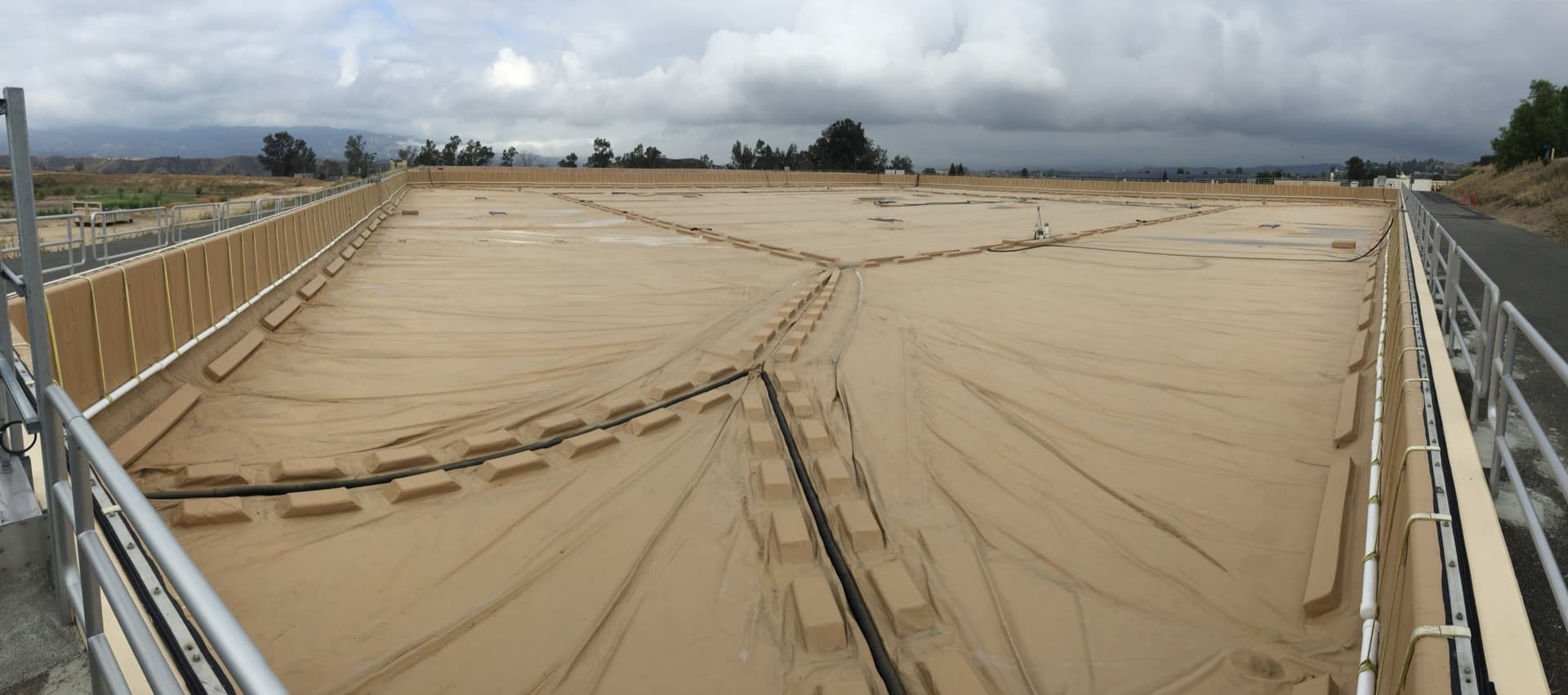
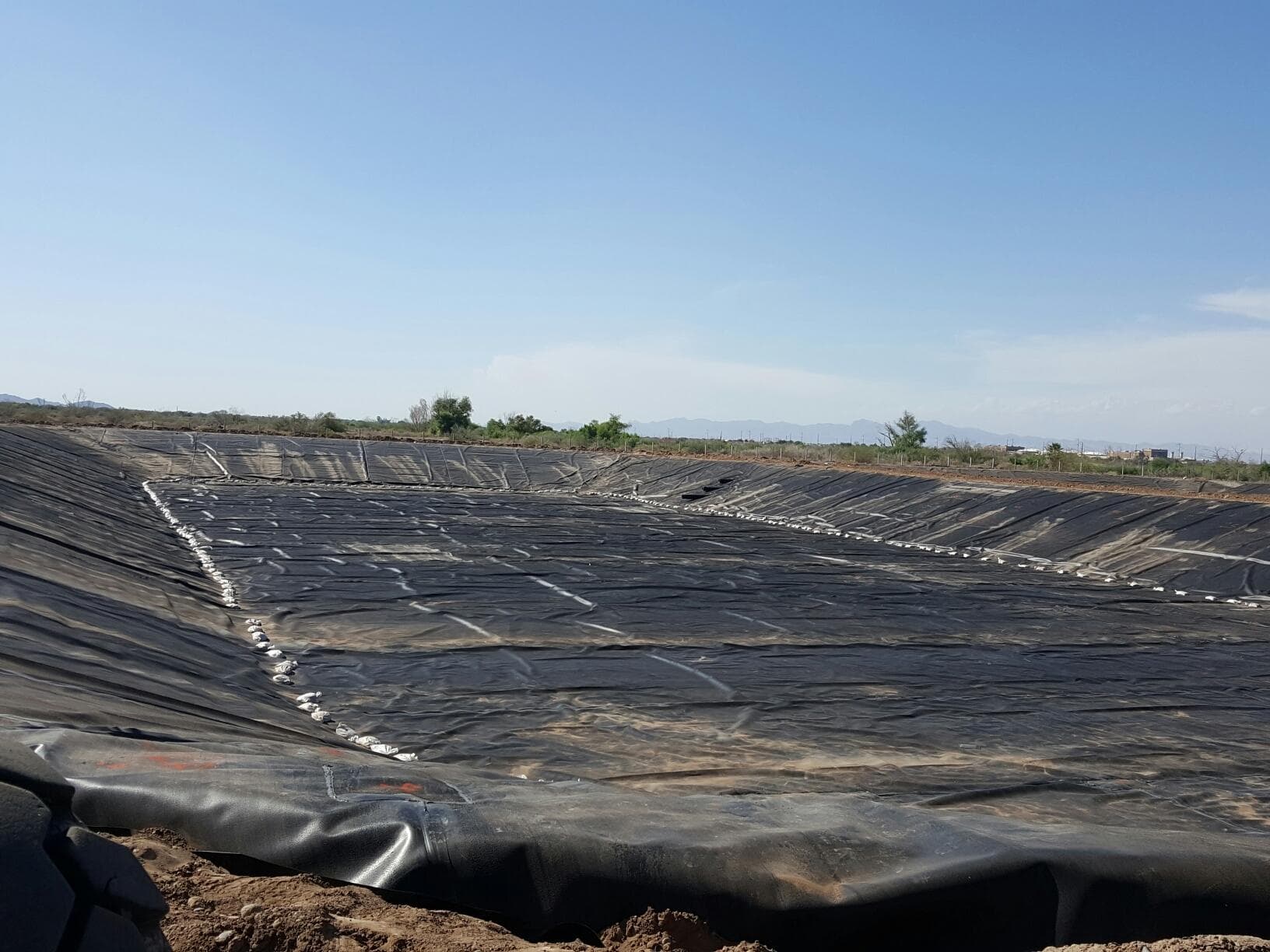
An HDPE geomembrane is lighter than the water it sits under. GRI-GM13 sets the minimum density for HDPE sheet at 0.940 grams per cubic centimeter against 1.0 for water, so the only thing holding a lagoon liner against the floor is the liquid stacked on top of it. Push gas underneath that sheet, or take the liquid away, and it goes where the pressure difference sends it. In the field that shows up as a whale: a pocket of trapped gas or water riding under the liner, sometimes a few feet across, sometimes large enough to break the surface of a full lagoon.
Whales are common in municipal, industrial, and agricultural lagoons, and close to fully preventable. Nearly all of that prevention happens before a roll of liner is deployed.
What a whale is and how it moves
A whale is a gas or liquid pocket beneath the geomembrane with enough pressure to lift the sheet off the subgrade. The liner is usually not torn when it first rises. It is a flexible membrane pulled out of plane, and the material for the bulge gets drawn from the surrounding floor and sidewalls.
That matters because gas migrates to the highest point available. On a sloped lagoon floor a whale climbs, working toward the sidewall and often ending up against the anchor trench at the crest. There it pulls directly on the anchorage and the nearest seams, and it takes wind and wave action a whale sitting on the floor never sees.
Where the gas comes from
There are four common sources, and telling them apart decides the fix.
- Organic material left in the subgrade. Topsoil, root mats, buried vegetation, and sludge left in place decompose anaerobically under the liner and generate methane and carbon dioxide with nowhere to go.
- Groundwater. A seasonal or perched water table above the lagoon floor produces straight hydrostatic uplift. From the surface it looks identical to a gas whale, and the remedy is completely different.
- Vapor from the subgrade. An exposed dark liner heats in the sun, drives moisture out of the soil below, and traps the vapor against the underside of the sheet. That lift is shallow and diffuse rather than a discrete bulge, and it often relaxes overnight.
- Relining over what was already there. New liner over an old liner, or over residual sludge, is the most reliable way to build a gas generator into a lagoon floor.
Why a whale is more than cosmetic
A liner that has lifted is under stress it was never detailed for, and the consequences stack up in a predictable order.
- Anchorage. A whale that migrates to the sidewall pulls the liner toward the crest and can draw material out of the anchor trench, leaving permanent slack on the slope.
- Seams. Field seams carry in-plane load, not the out-of-plane peel a rising bulge applies to the seam edges nearest it.
- Movement damage. A whale in a full lagoon rides the surface and moves with the wind, abrading the sheet where it rolls against the slope or appurtenances.
- Process and capacity. Displaced volume comes out of working storage, flow paths through the basin change, and in a treatment lagoon a rising floor can resuspend settled solids.
- Safety. An exposed whale in a drawn-down lagoon reads as walkable ground and is not. It is a membrane over a void.
Drawdown is when you find out
Most whales are discovered during a drawdown, and that is not a coincidence. The water column is the ballast. While a lagoon is full, under-liner gas stays put because the liquid above outweighs it. Lower the level and the balance flips: the pressure below is unchanged while the head above drops away, and the sheet lifts.
This is why draining a lined lagoon is a planned operation rather than a valve decision. On a basin with known gas generation or a high water table, the level comes down in stages and the liner gets watched as it goes. A fast full drawdown over an undrained subgrade can displace large areas of liner in an afternoon.
Designing the problem out
Every prevention measure that works either gives gas and water somewhere to go or removes the source before the liner covers it.
- Strip the organics. Remove topsoil, root mass, and vegetation from the footprint, then proof roll and finish the subgrade smooth and firm. This is the cheapest whale prevention there is and the one most often shortcut.
- Build a venting layer. A geocomposite drainage layer, a geonet, or a granular blanket under the liner gives gas a continuous path to a controlled outlet instead of letting it pond under the sheet.
- Vent above the liquid line. The collection layer terminates in vent pipes carried up through the berm and daylighted above maximum operating level, so gas leaves without a route back in.
- Use relief valves where venting to the berm is impractical. One-way valves welded into the liner let gas out while keeping liquid out of the subgrade.
- Handle water separately. High or seasonal groundwater calls for an underdrain and a sump. Venting gas from a basin whose real problem is hydrostatic head fixes nothing.
- Detail the anchor trench with slack. Polyethylene contracts in the cold, and a liner installed drum tight has nothing to give when something below it moves.
Relieving one that already exists
The instinct when a whale appears is to cut it and let the gas out. That is expensive. A slit below the liquid line is a leak, and a leak in the floor of an operating lagoon cannot be patched under water with any confidence.
The sequence that works starts with identifying which of the four sources is driving it, because a hydrostatic whale and a gas whale get different treatment. From there the extents are mapped, the level is managed rather than dumped, and the relief is engineered: pressure relief valves or vent boots welded into the sheet by extrusion, with the repair tested the way any other field seam is, by vacuum box on the patch or an air channel pressure test on a dual-track weld. Where groundwater is the driver, the head gets relieved through an underdrain rather than through the liner, and where the driver is material decomposing under a reline, the long term fix means going back to the subgrade.
What this means for an operator
A whale is a design and construction outcome that surfaces years later, not a maintenance surprise. If a lagoon sits on organic soil, has a seasonal water table, holds anything biologically active, or is being relined over an existing floor, the venting and drainage details belong in the design before material is ordered. They go in cheaply with the liner and expensively into a basin already in service.
The useful question for an installer bidding a lagoon is not which resin they are quoting. It is what happens to the gas and groundwater under the sheet, and what the plan is the day the basin gets drawn down. EC Applications installs, relines, and repairs lagoon and pond liners from offices in Anaheim California, Midland Texas, and Sparks Nevada, and holds California CSLB licenses #894068 and #1003207.