
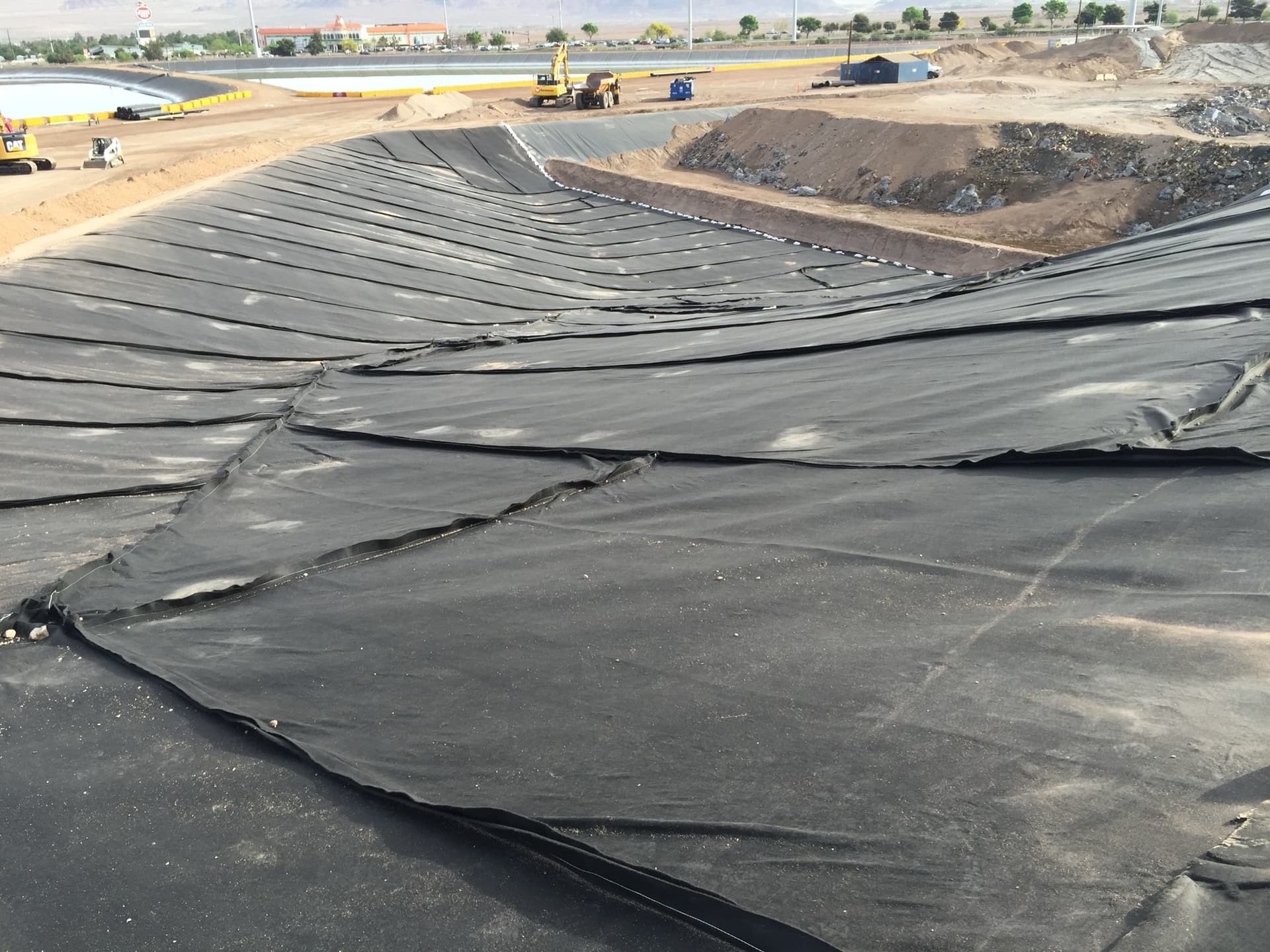
Methane Barrier Installation
A methane barrier is a gas-impermeable membrane system installed under slabs and against below-grade walls to keep methane gas out of living and work spaces. EC Applications installs under slab methane barrier systems for commercial and residential buildings in HDPE/LLDPE, PVC, spray-applied liquid boot, and composite absolute barrier materials, with every installation built to LADBS compliance and certified through Deputy Inspector coordination.
When is a methane barrier required?
A methane barrier is required when a building site sits in a designated methane zone or methane buffer zone, or when a soil gas investigation finds methane at concentrations the local building department considers hazardous. In the City of Los Angeles, LADBS enforces methane mitigation requirements under Division 71 of the Los Angeles Municipal Code: parcels mapped in the Methane Zone or Methane Buffer Zone must complete methane testing, and the measured gas concentration and pressure determine the site design level and the mitigation system the project must install.
Methane gas is naturally present in the subsurface as organic materials deteriorate in the soil. Concentrations can be particularly high near landfills and disposal sites, oil and gas wells, and petroleum-contaminated soils, and methane becomes combustible and explosive in high concentrations. That is why jurisdictions with historic oil fields and fill sites, Los Angeles most prominently, require an engineered barrier and vent system before a slab can be poured over affected ground.
What methane barrier work does EC Applications perform?
EC Applications installs the membrane portion of methane mitigation systems: gas-impermeable barriers placed under slabs, under floors, in basements, and against below-grade walls to prevent methane gas from finding its way into living or work spaces. Crews install the membrane over the prepared subgrade and vent layer, seam or spray it into a continuous gas-tight layer, seal every pipe and structural penetration, and protect the finished barrier until the concrete pour.
Methane barrier installations comply with LADBS standards, and EC Applications works closely with Deputy Inspectors to certify completed projects. The company performs this work on both commercial buildings and residential homes, coordinating with the general contractor, the methane mitigation engineer of record, and the inspection team so the barrier passes certification the first time.
Which methane barrier systems are used?
EC Applications installs four families of methane vapor barrier: HDPE and LLDPE sheet membranes, PVC membranes, spray-applied liquid boot systems, and composite absolute barrier products. Sheet systems arrive in rolls, are deployed over the vent layer, and are heat-welded into a continuous membrane. Liquid boot systems are spray-applied over a geotextile carrier and cure into a continuous membrane that conforms to grade beams, footings, and irregular penetrations. Absolute barrier products combine plies of membrane and metallized film for the lowest gas permeance on sites with elevated design levels.
The right system depends on the site design level assigned by the methane investigation, the complexity of the foundation, and the mitigation engineer's specification. Sheet membranes are efficient over large open slabs; spray-applied and composite systems earn their place on foundations with dense penetrations, stepped footings, or higher measured gas concentrations. EC Applications installs the major system types to LADBS standards and works closely with Deputy Inspectors to certify the completed installation, so the material choice can follow the engineering rather than the installer's limitations.
How is a methane barrier inspected before the slab pour?
The barrier is inspected while it is still fully exposed, before any concrete is placed, because a methane barrier cannot be repaired or verified once it is buried under the slab. A certified Deputy Inspector observes the installation, verifies the membrane material and thickness against the approved plans, and witnesses integrity testing of the seams and the field membrane per the manufacturer's approved procedures, which can include smoke testing of the completed membrane and mechanical or vacuum testing of welded seams.
EC Applications coordinates with the Deputy Inspector throughout the install rather than calling for inspection at the end. Penetration boots, seam details, and repairs are inspected as the work proceeds, the inspector's certification paperwork is completed, and the barrier is protected until the pour so the general contractor's schedule is not held hostage to a failed final inspection.
Does a methane barrier work for both commercial and residential buildings?
Yes. The same barrier principles apply to a single-family home over a former oil field and a multi-story commercial podium: a continuous gas-impermeable membrane below the occupied space, a vented gravel or geocomposite layer beneath it, and sealed penetrations. EC Applications installs methane barriers on commercial buildings, residential homes, under-slab applications, below-grade walls, under floors, and basements.
What changes between building types is scale and detailing. Residential foundations tend to have simpler slabs but tight site access; commercial projects bring elevator pits, grade beams, utility corridors, and hundreds of penetrations that each need a gas-tight boot. Crews that self-perform both sheet welding and spray-applied work can carry either project type from subgrade to certification.
Prepare a methane barrier installation inquiry
Send the approved mitigation plan, membrane specification, penetration schedule, inspection requirements, and slab-pour sequence. Identify which areas must remain accessible for testing before the barrier is covered.
Applications
- Under-slab methane mitigation
- Below-grade wall barriers
- Commercial buildings
- Residential homes
- Basements and below-grade floors
- Buildings in LADBS methane and buffer zones
- Construction near landfills and disposal sites
- Sites near oil and gas wells or petroleum-impacted soils
What sets this work apart
Systems are installed to LADBS compliance, with Deputy Inspector coordination throughout the install.
Quality assurance
Installation quality is verified against the project specification using the applicable ASTM and GRI test methods, with documented QA records at handoff.
Materials we install
- HDPE / LLDPE
- PVC
- liquid boot
- absolute barrier
Why ECA for this work
- Two CSLB-licensed entities: California licenses #894068 and #1003207.
- In-house specialty fabrication shop for prefabricated panels and custom geosynthetic products.
- Systems are installed to LADBS compliance, with Deputy Inspector coordination throughout the install.
- Offices in Anaheim, California; Midland, Texas; and Sparks, Nevada, serving sites nationwide.
Related project
Related resources
- Methane barriers for power and utility facilities
- Methane barrier installation across California
- Methane barrier work in Anaheim and Orange County
- What a methane barrier is and how gas mitigation works
- Passive and active methane mitigation systems, and what runs under a slab
- Field quality control and documentation
Material and system specifications
| System | Form | Typical use |
|---|---|---|
| HDPE / LLDPE membrane | Heat-welded sheet | Large open slabs where long weld runs are efficient |
| PVC membrane | Heat-welded or adhesive-seamed sheet | Flexible detailing around footings and below-grade walls |
| Liquid boot | Spray-applied over geotextile carrier | Complex foundations with dense penetrations and irregular grade beams |
| Absolute barrier | Composite multi-ply membrane | Elevated site design levels requiring the lowest gas permeance |
How the work gets done
- 1
Plan and design-level review
Review the approved methane mitigation plan, the site design level, and the specified barrier system with the general contractor and mitigation engineer before mobilizing.
- 2
Subgrade and vent layer acceptance
Confirm the subgrade and the vent layer beneath the barrier are complete, smooth, and free of debris that could puncture the membrane.
- 3
Membrane installation
Deploy and heat-weld sheet membrane, or spray-apply the liquid boot system over its geotextile carrier, forming one continuous gas-tight layer under the full slab footprint.
- 4
Penetration and perimeter sealing
Seal every pipe, pile, and structural penetration with gas-tight boots and terminate the membrane at footings and below-grade walls per the approved details.
- 5
Deputy Inspector testing and certification
Support seam testing and membrane integrity testing witnessed by the Deputy Inspector, complete repairs, and obtain certification before releasing the area for the concrete pour.
Frequently asked questions
More of what we install
Ready to scope your methane barriers project?
Our crews handle engineering, fabrication, field installation, and maintenance. Tell us about your site and we will scope it with you.