
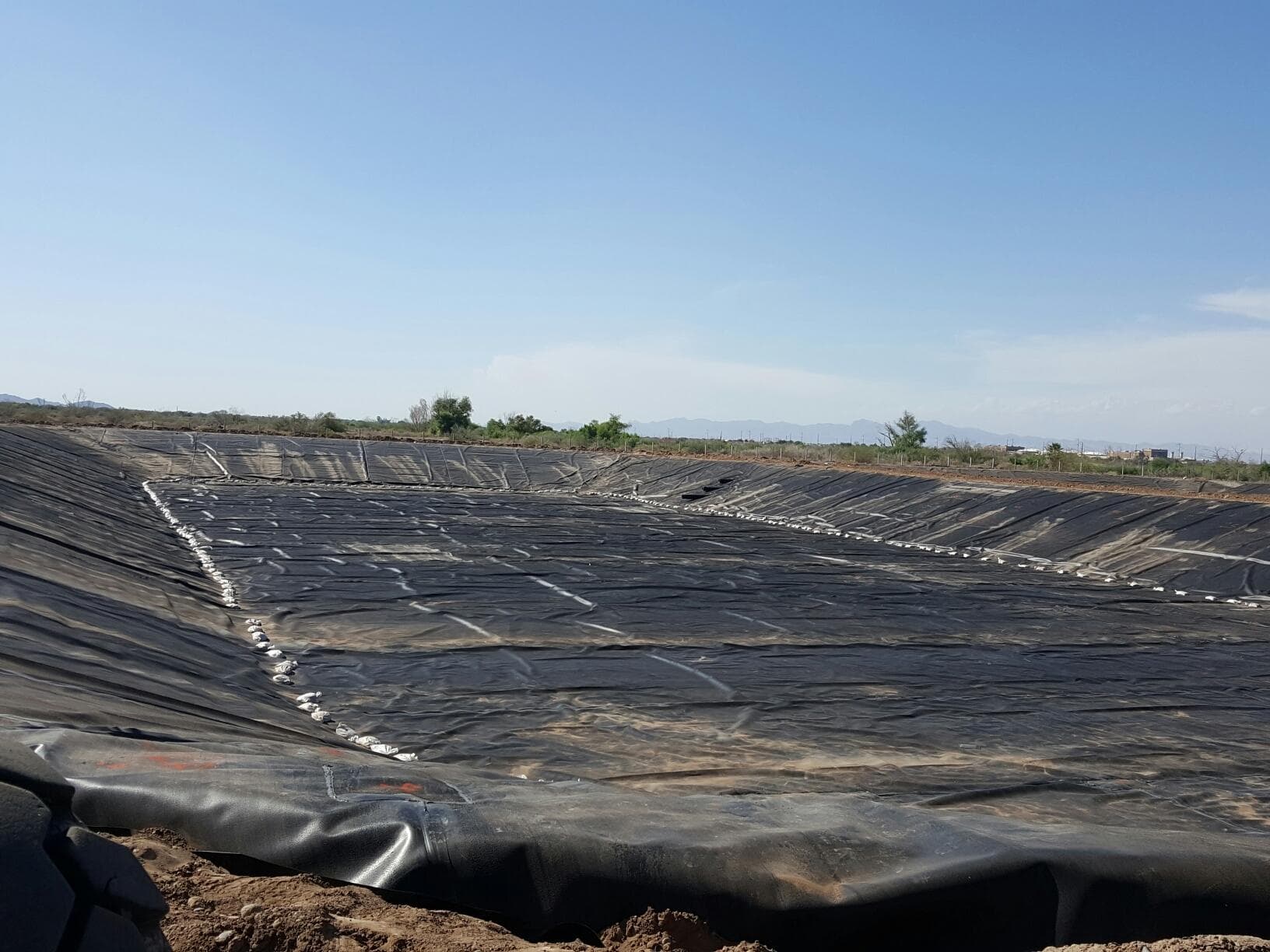
Power Plant Containment Liners
EC Applications installs containment for generating stations and utilities: SPCC secondary containment around fuel storage, lined process and cooling ponds, coal ash containment, and methane barriers for utility buildings. Our work for Hawaiian Electric Company includes a 600,000 square foot methane barrier and a fuel storage secondary containment system, both delivered inside utility facilities in multiple coordinated phases.
Containment across a generating station
A power plant concentrates more regulated liquids in one fence line than almost any other industrial facility: fuel oil and diesel storage, oil-filled transformers, cooling and process water, stormwater, wastewater from treatment systems, and at coal plants, ash and its leachate. Each of those streams carries its own containment requirement, and most of them are ultimately satisfied the same way: an engineered liner system that keeps the liquid where the design says it belongs.
EC Applications builds those liner systems for utilities, independent power producers, and the engineering firms that serve them. The scope runs from SPCC secondary containment around tank farms and transformer yards to lined ponds and basins, coal combustion residual containment, and gas barrier systems beneath utility buildings. Because generating stations rarely shut down for a lining contractor, our crews are used to phased work areas, plant safety programs, and schedules built around outages rather than around us.
SPCC secondary containment for fuel storage and transformers
The federal SPCC rule at 40 CFR 112 requires facilities that store oil above threshold quantities to provide secondary containment capable of holding the contents of the largest tank plus sufficient freeboard for precipitation, and it requires that containment to be sufficiently impervious to contain discharged oil. Earthen berms alone often cannot meet the imperviousness standard, which is where geomembrane liners come in: a welded liner across the containment floor, up the berm walls, and around tank ring walls turns a dike into a verified barrier.
The same logic applies at substations and switchyards, where oil-filled transformers and breakers can hold thousands of gallons of mineral oil. Lined containment pits and moats under and around that equipment are a standard way to satisfy SPCC obligations without rebuilding the yard in concrete. We install containment liners around in-service tanks and energized equipment using materials selected for hydrocarbon exposure, UV resistance, and the mechanical attachment details that fuel containment demands.
Proven at Hawaiian Electric
Our track record in this market is anchored by two projects completed for Hawaiian Electric Company facilities in Hawaii. The first was a 600,000 square foot biogas cover and passive methane barrier installed over an existing lagoon in multiple phases, coordinated across simultaneous contractor crews. The installation used 45 mil XR-5 geosynthetic liner over 12 ounce geotextile with roughly 1,000 linear feet of stainless steel mechanical attachment, and it included more than 150 penetrations through the liner. Every seam was vacuum tested and the completed installation was smoke tested to verify a leak-proof system.
The second project was the lining of a fuel storage secondary containment area at a Hawaiian Electric facility, covering the containment walls, floor, and tank ring wall with the same XR-5 and geotextile materials family. Together the two projects demonstrate the range this market requires: large-area gas barrier work with heavy penetration counts on one hand, and detailed fuel containment lining around critical utility assets on the other. We are glad to walk through both projects in detail during proposal review.
Utility ponds, basins, and wastewater
Generating stations run on water as much as fuel, and most of that water ends up in a lined impoundment at some point: cooling ponds, process water basins, stormwater retention, brine and blowdown ponds, and wastewater treatment lagoons. Liner selection follows the water chemistry and temperature. Elevated-temperature discharge, high total dissolved solids, and treatment chemicals each push the design toward specific geomembranes and thicknesses, and the right answer for a cooling pond is often different from the right answer for a brine pond fifty feet away.
We line new impoundments and reline existing ones, including floating cover systems where evaporation control or water quality protection matters. Every installation is delivered with tested seams and documented quality assurance, so the pond's compliance file is complete the day the crew demobilizes.
Coal ash and CCR containment
The federal coal combustion residuals rule under RCRA Subtitle D set composite liner requirements for new CCR landfills and surface impoundments and forced closure or retrofit decisions for many unlined legacy ash ponds. Whether a utility is building a new lined CCR unit, retrofitting an impoundment, or capping a unit for closure, the work is geosynthetics: composite liner systems on the bottom side and engineered final covers, in the form of geomembrane caps, on top.
EC Applications performs that lining and capping work as a specialty geosynthetics installer, working to the project engineer's CQA plan with full seam testing and as-built documentation. For utilities managing CCR compliance across multiple units, a single installation contractor with consistent QA records simplifies both construction and the regulatory paper trail.
Working inside operating plants
Most utility containment work happens at plants that cannot stop generating. That reality shapes how we plan: phased work areas that keep containment functional around in-service equipment, prefabricated liner panels that cut field welding time inside the fence, and crews accustomed to utility badging, safety orientation, and hot work controls. Where a full field-welded installation would keep a containment area open for weeks, prefabricated drop-in liners can shrink the exposure window dramatically.
Methane and gas barrier work follows the same playbook. Utility buildings sited on or near landfills, former marshland, or other gas-generating ground need sub-slab barrier systems, and those systems can be installed during construction or retrofitted as part of a larger project, as the Hawaiian Electric barrier work demonstrated at scale.
Services for this market
- Secondary Containment
SPCC-compliant secondary containment liners around fuel storage tanks, tank ring walls, and transformer areas.
- Methane Barriers
Methane and gas barrier systems for utility buildings and covered lagoons, as installed for Hawaiian Electric.
- Wastewater Containment
Process water, stormwater, brine, and cooling pond liners for generating stations.
- Landfill Liner Systems
Coal ash (CCR) containment lining, impoundment retrofit, and closure capping.
- Floating Covers
Floating cover systems for utility raw water and process ponds where evaporation and water quality matter.
Frequently asked questions
More markets we serve
Working on a power and utilities project?
Tell us about the site and our team will scope the right containment approach with you, from materials to installation.