
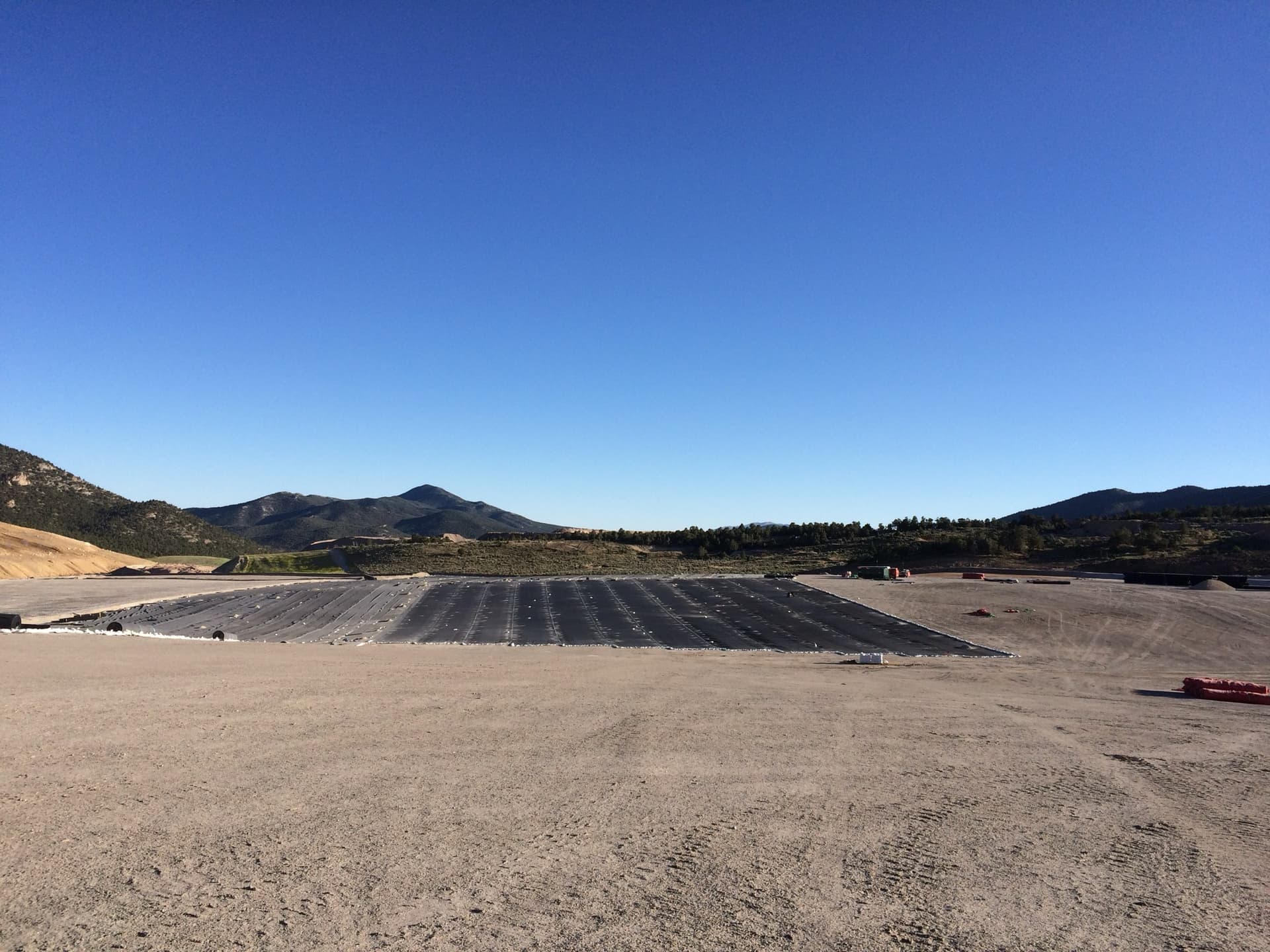
Landfill Construction Liners
EC Applications lines landfills across their full lifecycle: composite liner systems for new MSW and hazardous waste cells, coal ash containment, leachate pond and collection lining, and geosynthetic closure caps for cells reaching final grade.
Containment across the fill lifecycle
A landfill is not one containment problem. It is a sequence of them. A new cell needs a bottom liner system before the first load of waste arrives. An operating site needs leachate ponds, contact water basins, and collection sumps that stay tight for decades. A cell reaching final grade needs a closure cap that sheds stormwater and controls gas. Each phase has its own regulatory driver, its own geosynthetic cross section, and its own construction quality assurance requirements.
EC Applications installs landfill construction liners at every one of those phases. Our crews place and weld geomembranes, geosynthetic clay liners, geotextiles, and drainage composites for municipal solid waste, hazardous waste, coal combustion residual, and canyon fill sites. Because the same installer handles base liners, leachate infrastructure, and closure systems, owners and their engineers get consistent seaming, documentation, and CQA support from cell construction through final cover.
MSW landfill cell construction
New municipal solid waste cells are governed by RCRA Subtitle D, which sets the baseline composite liner: a flexible membrane liner, 60 mil minimum when HDPE, over two feet of compacted soil at a hydraulic conductivity of no more than 1 x 10^-7 centimeters per second, with a leachate collection layer above that limits hydraulic head on the liner to 30 centimeters or less. A geosynthetic clay liner can take the place of the compacted soil component as an approved alternative design, not as the regulatory baseline. Many state programs go further. California's Title 27, for example, adds its own siting and engineered alternative requirements that shape the final cross section.
Cell construction is sequencing work. Subgrade acceptance, GCL or clay placement, geomembrane deployment and welding, geotextile cushion layers, and the drainage gravel or geocomposite above the liner all have to land in order, often on steep interior slopes with tight anchor trench details. Our installation crews work to the project CQA plan at each step, with trial welds, destructive seam sampling, and nondestructive testing of every field seam documented before the next layer covers the work.
Coal ash pond liners and CCR units
Coal combustion residual containment follows its own federal framework. The 2015 CCR rule under RCRA Subtitle D requires new surface impoundments and landfills that receive ash to be built with composite liners, and it drives groundwater monitoring, location restrictions, and closure obligations for existing units. Utilities closing unlined ash ponds face a choice between closure by removal and closure in place with an engineered cap, and both paths run through geosynthetics.
ECA installs the liner systems these projects depend on: composite base liners for new CCR landfill cells, geomembrane liners for ash ponds and contact water basins, and low-permeability capping systems for impoundments closing in place. The materials are familiar, HDPE and LLDPE geomembranes over GCLs with geocomposite drainage, but CCR work adds schedule pressure from compliance deadlines and heavier documentation, which is exactly where a disciplined CQA process earns its keep.
Closure caps and final covers
When a cell reaches final grade, the containment problem inverts. The base liner keeps leachate in; the closure cap keeps water out. A typical geosynthetic final cover stacks a gas management layer over the graded waste, a barrier geomembrane, a drainage geocomposite to carry infiltration off the barrier, and a vegetated soil cover that resists erosion. Subtitle D requires the final cover to be no more permeable than the bottom liner system, which is why prescriptive soil-only caps have largely given way to geomembrane-based designs.
Cap installation is slope work. Veneer stability, textured geomembrane on side slopes, anchor trenches, downchute and letdown details, and penetrations for gas wells and leachate risers all demand field crews who have built final covers before. ECA installs closure caps as complete systems, coordinating with the earthwork contractor on subgrade and cover soil so the geosynthetics go down on schedule and stay put through the post-closure care period.
Leachate management liners
Every operating landfill generates leachate, and the ponds, basins, and sumps that manage it are containment structures in their own right. Leachate evaporation ponds and storage basins are typically double-lined with leak detection between the liners, because the liquid they hold is exactly what the base liner system exists to keep out of groundwater. Contact water and sedimentation basins carry lighter cross sections but still demand welded geomembrane and documented seam testing.
ECA lines leachate ponds, installs sump and riser details, and fabricates pipe boots and penetration seals in the field. Where odor control or rainwater exclusion matters, we add floating covers over leachate storage. That combination of pond liner, penetration detail, and cover work is a core part of what our crews do across the wastewater and landfill markets.
CQA, seam testing, and documentation
Landfill liners are regulated construction, and the paper trail matters as much as the weld. Industry-standard construction quality assurance follows the project CQA plan and its referenced methods: trial welds before each seaming shift, destructive seam samples tested for shear and peel per ASTM D6392, nondestructive air pressure or vacuum testing of field seams, and material conformance to GRI GM13 for HDPE geomembrane. Panel placement logs, seam maps, and repair records go to the CQA engineer for the certification report the regulator ultimately reviews.
Our crews build that documentation as the work proceeds, not after the fact. For owners and engineers, that means fewer surprises at certification and a liner record that stands up when the agency, or a future expansion design, asks how the cell was built.
Services for this market
- Landfill Liner Systems
Single and composite-lined cells, caps, and leachate ponds for MSW, hazardous, coal ash, and canyon fill sites.
- Floating Covers
Floating covers for leachate ponds: odor control, rainwater exclusion, and gas collection applications.
- Wastewater Containment
Leachate and contact water pond liners with documented seam testing and CQA support.
Building a contractor shortlist? Compare installation scopes, relevant experience, and quality records before requesting bids.
Frequently asked questions
More markets we serve
Working on a landfill project?
Tell us about the site and our team will scope the right containment approach with you, from materials to installation.