
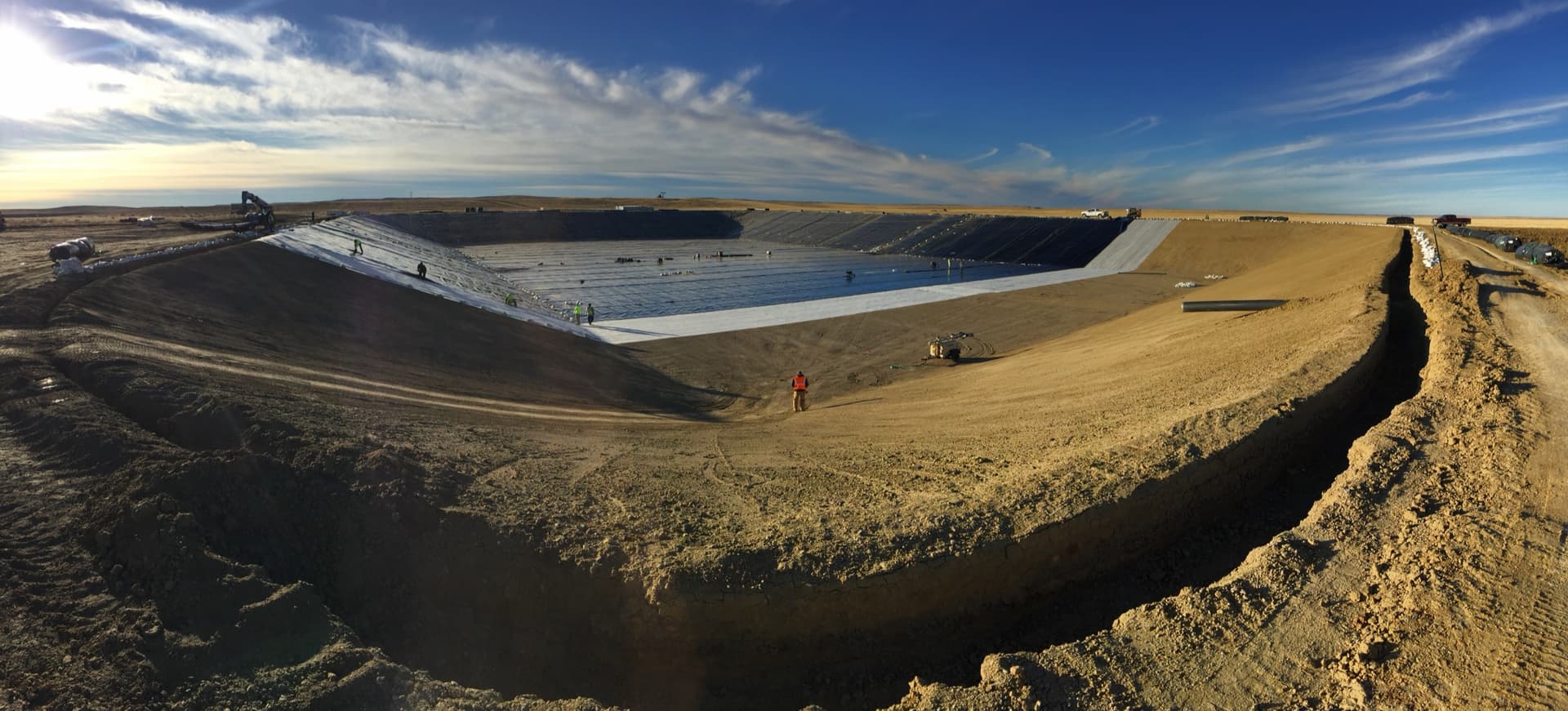
Geomembrane Liner Installer in California
EC Applications is a CSLB-licensed geomembrane liner installer headquartered in Anaheim, California, self-performing reservoir linings, LADBS methane barriers, wastewater lagoon liners, landfill systems, and secondary containment across the state.
A licensed California installer, based in California
EC Applications installs geomembrane liners, floating covers, and containment systems throughout California from its headquarters at 901 East Orangethorpe Avenue in Anaheim. The company operates under two California Contractors State License Board records, CSLB #894068 and CSLB #1003207. That licensing matters in California more than in most states, because public agencies, water districts, and general contractors routinely require a verifiable CSLB record before a lining subcontractor can be listed on a bid or allowed on site.
Crews self-perform the work: panel deployment, fusion and extrusion welding, seam testing, and repair are done by EC Applications field teams rather than brokered out. Self-performance keeps quality control in one set of hands and makes scheduling predictable for owners phasing work around plant operations or construction sequences.
Built for California's regulatory environment
California containment work is shaped by a dense regulatory framework, and liner scope usually traces back to a specific rule. Waste discharge requirements issued by the State Water Resources Control Board and the nine Regional Water Quality Control Boards drive liner and leak-detection specifications for ponds, lagoons, and impoundments. Title 27 of the California Code of Regulations governs landfill and waste management unit design, including composite liner systems, leachate containment, and closure caps. In Los Angeles, LADBS methane zone and methane buffer zone designations require under-slab methane barrier systems on new construction, with inspection sign-off before the slab pour.
Federal rules layer on top of the state framework. Facilities storing oil above SPCC thresholds under 40 CFR Part 112 need secondary containment that will actually hold product, which is where engineered geomembrane containment replaces cracked concrete and unlined earthen berms. EC Applications builds liner systems to the project specification and coordinates with the engineer of record and inspectors so testing and documentation line up with what the permit requires.
Water infrastructure across the state
Much of California's water storage and treatment infrastructure is decades old, and lining is one of the most cost-effective ways to extend its life. Potable water reservoirs, clearwells, and tanks can be rehabilitated with reinforced geomembrane linings using potable-contact materials rather than being demolished and rebuilt. Floating covers control evaporation and protect stored water quality, a persistent concern for agencies managing supply through drought cycles. On the treatment side, municipal and industrial plants use geomembrane liners for lagoons, holding ponds, sludge drying beds, and sediment basins, and baffle curtains to correct short-circuiting in existing basins.
Agricultural water users are part of the same picture. Irrigation storage ponds and canals lose significant water to seepage when unlined, and a geomembrane liner brings those losses down to near zero, which matters when every acre-foot is metered and priced.
Statewide coverage from the Anaheim headquarters
Field crews mobilize from Anaheim to projects throughout California, from San Diego to the Central Valley to the far north of the state, and across the western United States when a project calls for it. Southern California work, including LADBS methane barrier installations across Los Angeles and Orange County, is handled by the headquarters crew with short mobilization times. The company also fabricates prefabricated geomembrane panels, which reduce field seams and compress installation schedules on remote or weather-constrained California sites.
For projects in the Permian Basin and northern Nevada, EC Applications operates offices in Midland, Texas and Sparks, Nevada, so California owners with multi-state portfolios can work with one installer across their footprint.
Offices serving California
Licensing
- CSLB License #894068 (California)
- CSLB License #1003207 (California)
What we install in California
Frequently asked questions
More places we work
Have a site in California?
Tell us about the application and our team will scope the right containment approach with you, from materials to installation.