On this page
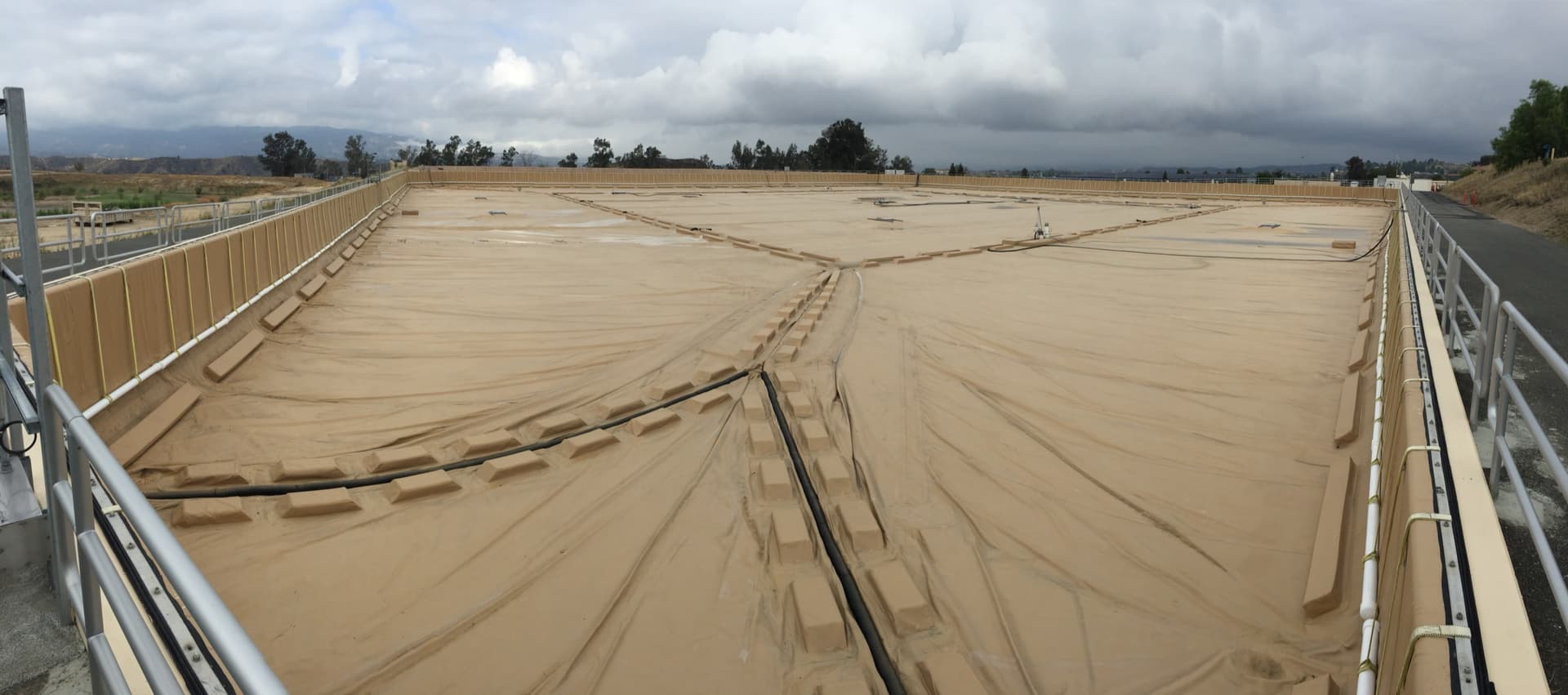
EC Applications fabricates custom geomembrane panels up to 25,000 square feet or 4,000 pounds each, then ships them folded on pallets or rolled. A square panel of that area is about 158 feet on a side. One of them can line a containment area that would otherwise be built from many smaller sheets welded on site.
Factory fabrication moves seaming off the job site and into a building. It does not move all of it, and it does not suit every material. Knowing where the line falls helps an owner or engineer write a specification that gets the benefit without surprises at deployment.
Which geomembranes fold well enough to fabricate
A prefabricated panel has to be folded or rolled, freighted, and opened again without damage. That favors flexible sheets. Reinforced polypropylene, PVC, XR geomembranes, EPDM, and CSPE all fold compactly and recover when unfolded, which is why they are the usual candidates for large one-piece panels.
Reinforced polypropylene, covered by GRI-GM18, and XR-5, an ethylene interpolymer alloy coated over polyester fabric, carry a scrim that holds dimensions under load and resists tearing at folds. PVC stays flexible in cold weather and conforms to irregular shapes. LLDPE, covered by GRI-GM17, is flexible enough to fabricate into panels sized for the site.
HDPE is the exception. Its high crystallinity gives it broad chemical resistance and a long service record, and it also makes the sheet stiff. HDPE is usually deployed from rolls and welded in the field, or supplied as accordion-folded, factory-seamed sections sized to the handling equipment available at the site.
What moves into the shop
In the shop, wind, dust, moisture, and temperature swings stay outside. The sheet lies flat on a clean floor, welding parameters hold steady, and every seam can be tested before the panel ships. On a job site, the same weld competes with a breeze lifting the sheet, grit on the overlap, and a subgrade that heats and cools through the day.
Detailed work benefits most. Corners, sumps, and pipe penetrations are where field installs collect patches and extrusion welds. A drop-in containment liner can arrive with its corners formed and custom boots already fitted, so the crew places it rather than building it in place.
What still gets welded on site
Large areas still need more than one panel, and the joints between panels are closed in the field. Anchor trenches, batten attachments to concrete walls, and connections to existing liners are field work too. Any penetration whose exact location is unknown until the panel is in place gets detailed on site.
Those field seams get the same quality assurance as on any install. Dual-track wedge seams are typically air-pressure tested, extrusion welds are vacuum-box tested, and destructive samples are cut and tested in shear and peel. Prefabrication shortens that list. It does not remove it.
Where prefabrication does not pay
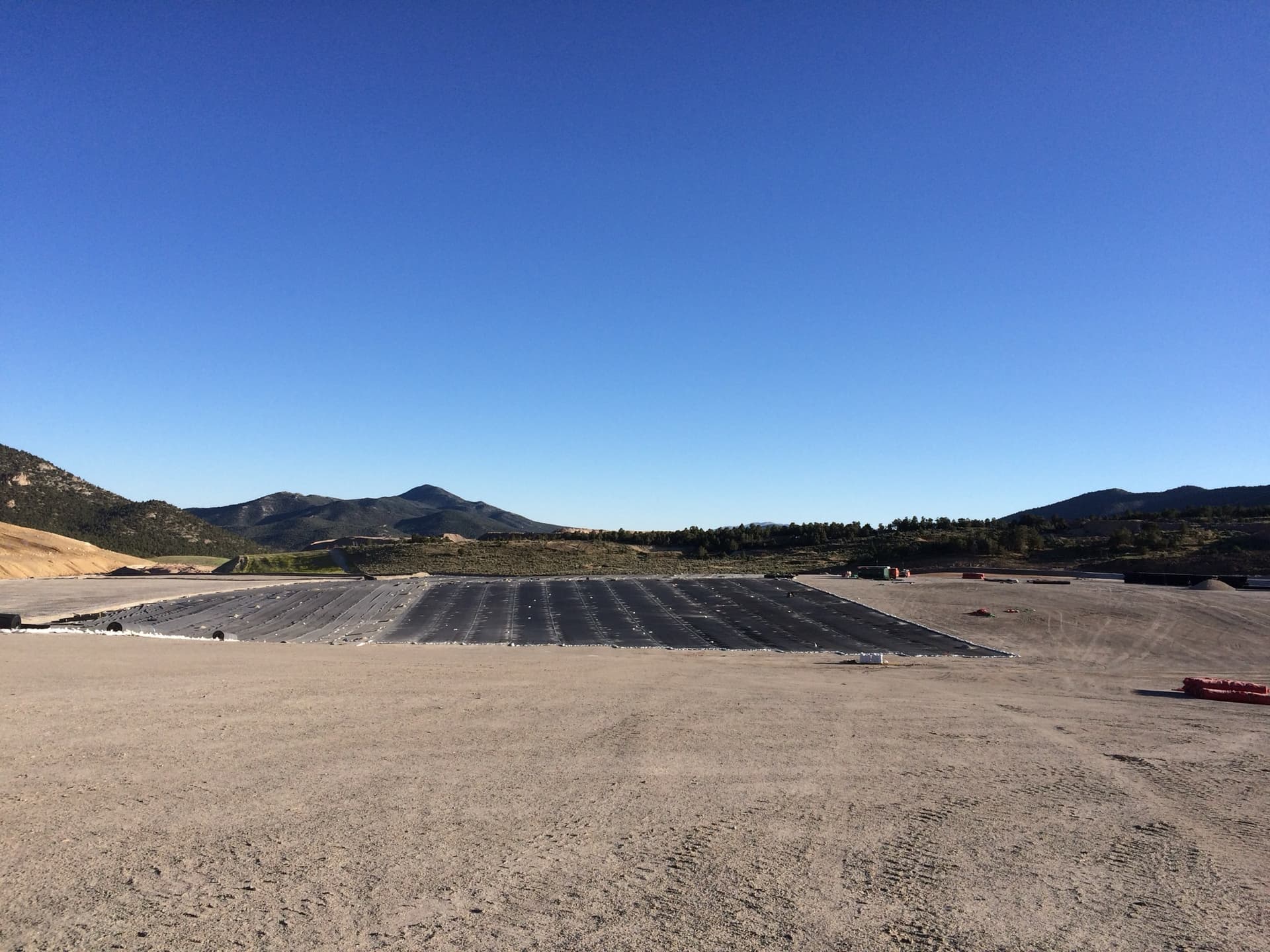
Landfill cells and heap leach pads cover acres, and their designs usually call for textured HDPE in thicknesses that do not fold into a 4,000 pound panel. On that work, rolls deployed and welded panel by panel are still the efficient method. The same goes for any site where no equipment can lift or unroll a large panel.
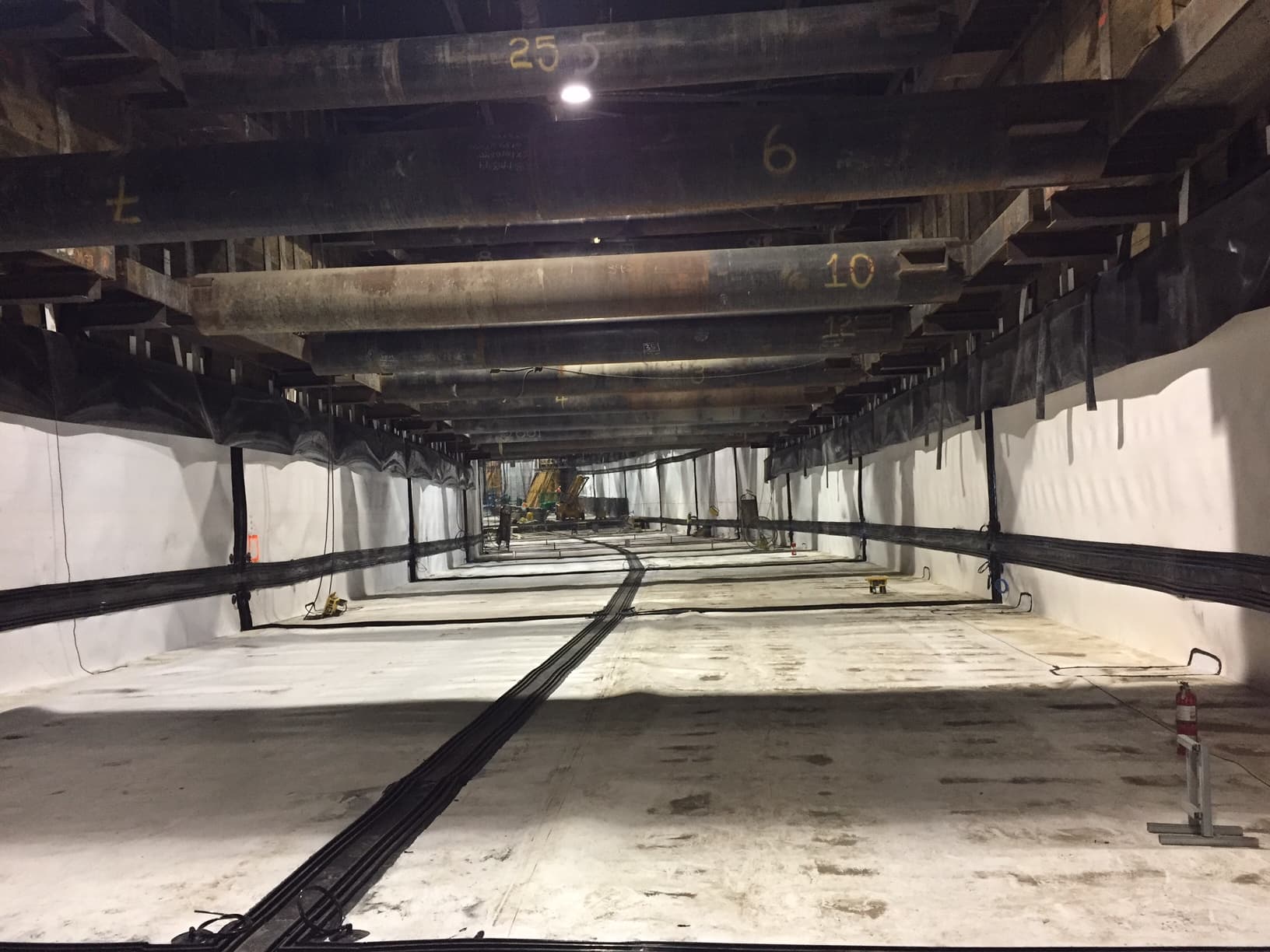
Prefabrication pays where the area is moderate, the geometry is detailed, or the schedule is tight: reservoir liners and covers, lagoon liners, drop-in liners for tank containment at mines and landfills, and portable berms. It also pays at remote sites, where every day of field welding adds travel, lodging, and weather risk.
Why a big panel is harder to place than it looks
A 25,000 square foot sheet catches wind like a sail. It has to be lifted with the right equipment, unfolded in the order it was folded, and ballasted as it opens. A panel that opens in the wrong direction or shifts before it is weighted down can put a fold where a seam was meant to be.
That is the part of a prefabricated install a drawing cannot show. EC Applications fabricates in its own shop and installs with its own crews from Anaheim, California, Midland, Texas, and Sparks, Nevada, so the panel is folded with its deployment already planned. Our crews are the most experienced in the industry. They consistently deliver high quality installations with unparalleled customer service.
What to put in the specification
- A panel layout drawing that marks shop seams and field seams separately.
- The weight of each panel and the lifting method the site will use.
- Labels on each panel showing its position and the direction it unfolds.
- Shop seam test records delivered with the panels.
- A field quality assurance plan for every closure seam, penetration, and attachment.
With those items in hand, the owner can see exactly what was welded under controlled conditions, what was welded on site, and how each one was tested.