
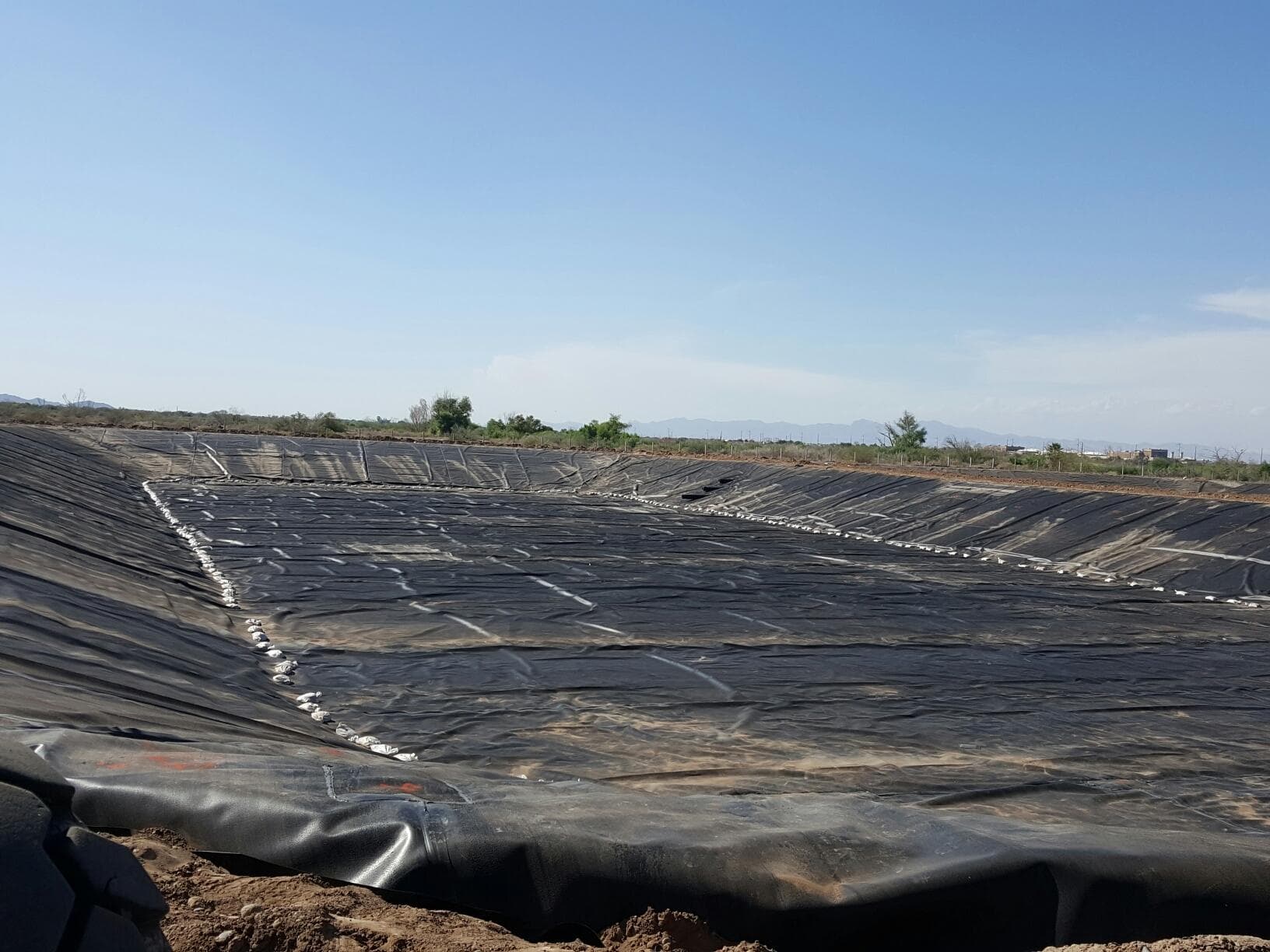
Geomembrane Installer in Reno and Sparks, NV
EC Applications serves northern Nevada from its Sparks office at 150 Isidor Court, installing and repairing heap leach pad, tailings, and pond liner systems for mining districts along the I-80 corridor plus industrial and municipal lining around Reno and Sparks.
A lining base on the I-80 mining corridor
The Sparks office at 150 Isidor Court, Building 1, Suite 101 puts EC Applications crews within a day's mobilization of the mining districts strung along Interstate 80: the Lovelock and Winnemucca areas, Battle Mountain, and the operations clustered around Elko and the Carlin trend. The same corridor carries the equipment, fuel, and materials that keep those operations running, which makes it the natural staging point for lining work anywhere in northern Nevada.
From Sparks, crews mobilize with welding equipment, testing gear, and deployment hardware for geomembrane projects of any scale, from a single pond repair to phased construction across a multi-acre pad. Projects outside northern Nevada are supported by the company's Anaheim, California headquarters and its Midland, Texas office, so large or overlapping schedules do not have to wait on a single crew.
Heap leach pads and solution containment
Heap leach facilities concentrate everything that is demanding about geosynthetics into one system: large lined areas, aggressive process solutions, high ore loads, and regulators who expect zero discharge. Nevada's Water Pollution Control permitting program, administered by the Nevada Division of Environmental Protection (NDEP) Bureau of Mining Regulation and Reclamation, requires fluid management systems designed so process solutions never reach groundwater. In practice that means engineered composite liner systems under leach pads, ponds, and solution channels, installed to a construction quality assurance (CQA) plan and documented seam by seam.
EC Applications installs the geomembrane components of those systems: HDPE and LLDPE pad liners over prepared subgrade or compacted soil liners, geotextile cushion layers that protect the membrane from overliner drain rock, and the pregnant, barren, and event pond liners that close the solution loop. Seams are fusion or extrusion welded and verified with air pressure and vacuum testing, with destructive seam samples pulled at the frequency the project CQA plan requires. Materials are specified to recognized industry standards such as GRI GM13 for HDPE geomembranes, so the installed liner matches what the engineer of record and the regulator approved.
Tailings, evaporation ponds, and mine water management
Beyond the leach circuit, mines manage water everywhere: tailings storage facilities, reclaim and process water ponds, evaporation cells, stormwater basins, and truck wash containment. Each is a candidate for a geomembrane system, and each carries its own duty cycle. Tailings impoundments need liners that tolerate consolidation and long service lives; evaporation ponds see wide temperature swings and high UV exposure on exposed slopes; reclaim ponds cycle up and down daily.
Crews from the Sparks office install new liner systems for these facilities and expand or repair existing ones. That includes tying new geomembrane into previously installed liner, extending pads and ponds in phases as an operation grows, and replacing weathered or damaged panels without rebuilding the entire containment. Floating covers and baffle systems for process and fresh water ponds are available through the company's specialty fabrication capability.
Working on operating mines
Most northern Nevada lining work happens on sites that are already producing, which changes how a project has to run. Access is controlled, hot work is permitted, and schedules bend around blasting, haul traffic, and solution management. Operating mines set their own safety, training, and site access requirements, and EC Applications plans crews, equipment, and sequencing around them so lining work fits inside the operation instead of interrupting it.
Repair work in particular rewards a contractor that can mobilize quickly, diagnose the failure, and weld a durable fix. A leak detected in a solution pond or a tear found during a pad inspection is a compliance clock as much as a maintenance item, and NDEP permits generally require timely corrective action. Having a crew base in Sparks rather than out of state shortens that response.
Industrial and municipal lining around Reno and Sparks
The Truckee Meadows is more than a gateway to the mining districts. The Reno-Sparks area's industrial parks, logistics centers, and municipal utilities generate steady demand for containment: wastewater and process water ponds, fire protection and raw water reservoirs, stormwater basins, and secondary containment for fuel and chemical storage. The same crews and welding standards that serve mine sites handle this work, scaled to smaller footprints and tighter urban schedules.
Northern Nevada's high desert climate is part of every installation plan. At roughly 4,400 feet, the area sees hot, dry summers, cold winters, and persistent wind. Geomembrane deployment and welding are adjusted for panel temperature, wind loading, and seasonal windows, which is standard practice for experienced installers working in the Great Basin.
Local office
Licensing
- CSLB License #894068 (California)
- CSLB License #1003207 (California)
What we install in Sparks and Reno
Frequently asked questions
More places we work
Have a site in Sparks and Reno?
Tell us about the application and our team will scope the right containment approach with you, from materials to installation.