On this page
The permeability requirement for a landfill cap is written as a comparison, not as a value. 40 CFR 258.60(a)(1) says the final cover system has to have a permeability less than or equal to the permeability of any bottom liner system or natural subsoils present, or a permeability no greater than 1 x 10^-5 centimeters per second, whichever is less. The number people quote is the 1 x 10^-5. The words that decide the job are whichever is less.
On a cell built to the Subtitle D composite liner in 258.40(b), the lower component is at least two feet of compacted soil at a hydraulic conductivity of no more than 1 x 10^-7 centimeters per second. A geomembrane's own permeability is not expressed on that scale, so in practice the comparison lands on the soil component of the base. The cap has to match the base it sits over. That is two orders of magnitude tighter than the default figure, and it is the first thing to settle before anyone lays out a cover section.
The prescriptive cover is two feet of dirt
The rest of 258.60(a) is short. An infiltration layer containing a minimum of 18 inches of earthen material, and above it an erosion layer containing a minimum of 6 inches of earthen material capable of sustaining native plant growth. That is the entire prescriptive design: two feet of soil placed over a waste mass and expected to hold a conductivity that matches the bottom liner.
It is a hard thing to ask of compacted clay in the open. Clay at final grade has to survive desiccation cracking through dry summers, freeze and thaw at elevation, root and burrow intrusion from the vegetation the same rule requires, and the differential settlement of decomposing waste underneath it. The regulation concedes the movement point itself. Post-closure care under 258.61(a)(1) requires repairs to the cover to correct the effects of settlement, subsidence, and erosion. A compacted clay layer answers that movement by cracking. A geomembrane answers it by stretching.
Most modern caps are approved as alternative covers
258.60(b) is the subsection most closure designs actually run through. The Director of an approved State may approve an alternative final cover with an infiltration layer that achieves an equivalent reduction in infiltration to the prescriptive layer, and an erosion layer that gives equivalent protection from wind and water erosion. Equivalence is the standard there, not the 18 and 6 inch geometry.
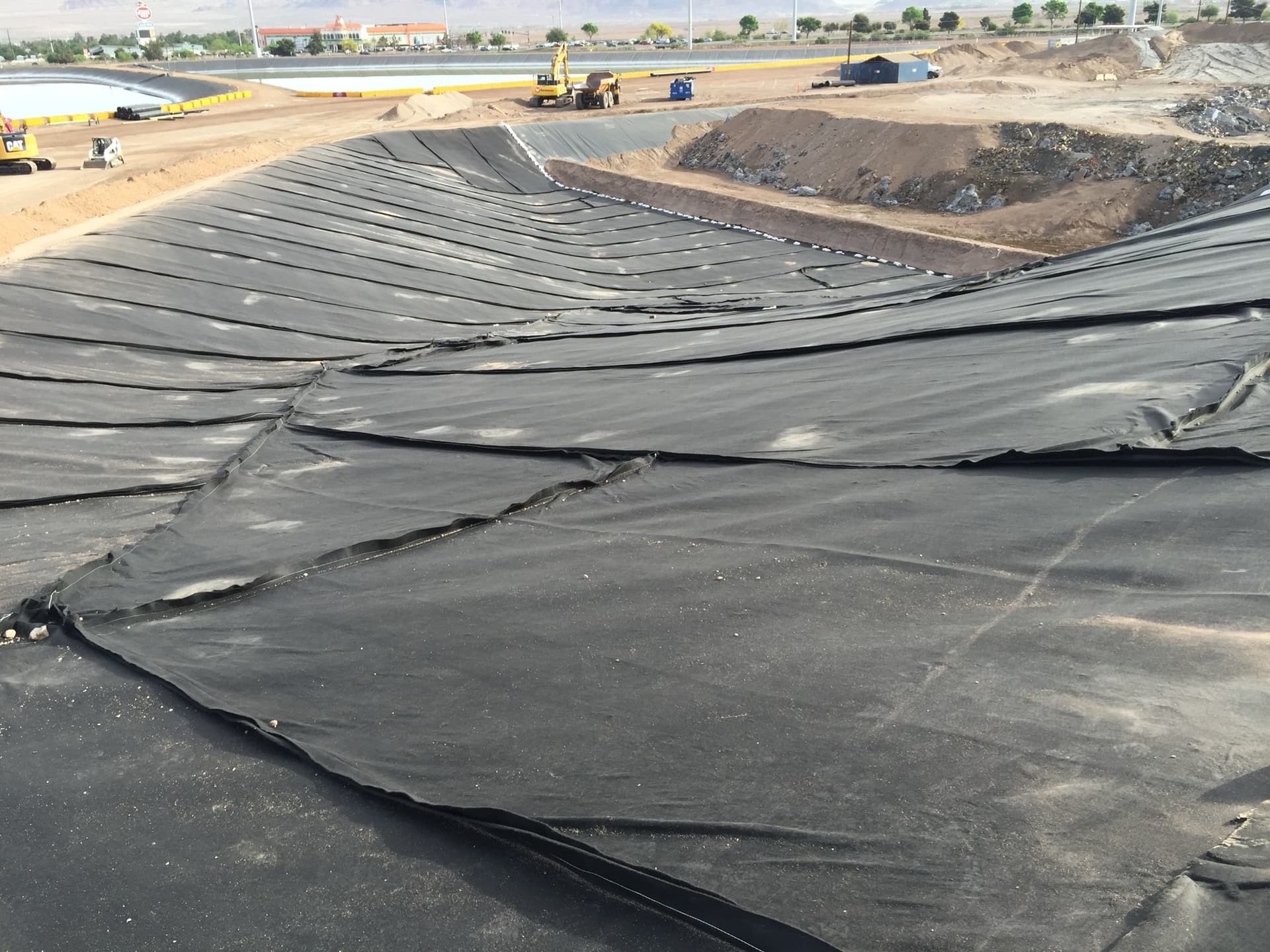
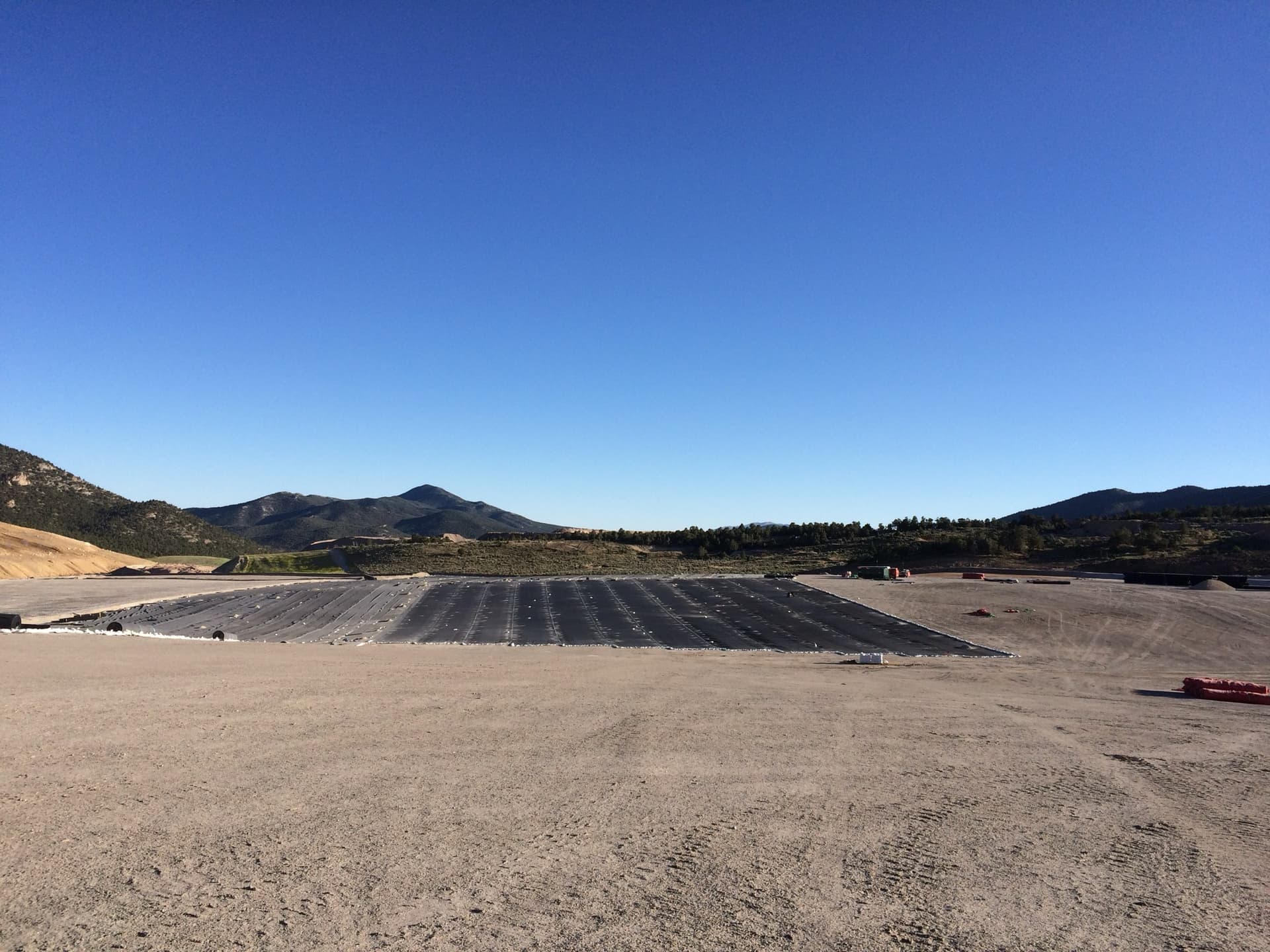
That opening is what a geomembrane or GCL cap is built on, and what engineered turf cover systems such as ClosureTurf are approved against in place of a vegetated soil cover. It also changes the earthwork. A prescriptive cover means importing and placing two feet of borrow across the whole footprint. An alternative cover trades most of that volume for a barrier layer, a drainage geocomposite, and a thinner cover soil, which on a large closure is a different job in haul and in schedule.
Veneer stability decides the section above the barrier
The barrier gets the attention in review. The layer above it decides whether the cover stays on the slope. Water that infiltrates the cover soil has to be carried down the slope and off the cap, and if it collects at the interface instead, the cover soil sits saturated on a low friction surface at final landfill grades. Interface friction between the cover soil, the drainage geocomposite, and the barrier is the calculation that governs the section, which is why textured geomembrane goes on the cap slopes while smooth sheet stays in the flat.
Penetrations follow the same logic. A cap is a sheet with holes in it by design, carrying gas wells, risers, and other appurtenances through the barrier, and each one is a hand detail that gets boot flashed and extrusion welded rather than run with a wedge welder. EC Applications installs closure caps from the perimeter anchor trench in, penetrations included, as part of its landfill scope, alongside the composite base liners and leachate ponds on the same sites.
Closure runs on a 180 day clock
The schedule is in the regulation too. Under 258.60(f), closure activities begin no later than 30 days after the unit receives its known final receipt of waste, or no later than one year after the most recent receipt where the unit still has capacity and is reasonably likely to take more. Under 258.60(g), closure has to be complete within 180 days of that start, unless the Director of an approved State grants an extension on a demonstration that it will of necessity take longer.
180 days is one construction season in most of the country and less than one at elevation. Panel layout, material lead time, and the CQA plan have to be settled before the trigger date, because the clock starts on the last load of waste rather than on the day the closure drawings come back approved. 258.60(h) then requires an independent registered professional engineer to certify that closure was completed in accordance with the closure plan, which makes the as-built record part of the deliverable: trial welds qualifying each welder and machine at the start of the shift, air channel pressure testing per ASTM D5820 on fusion seams, vacuum box or spark testing at extrusion details, and destructive samples tested for shear and peel per ASTM D6392.
Thirty years of maintaining the only layer anyone can reach
258.61(a) sets post-closure care at 30 years, a period the Director of an approved State can shorten or lengthen on a demonstration. The first item on that list is maintaining the integrity and effectiveness of the final cover, making the repairs needed to correct settlement, subsidence, and erosion, and keeping run-on and run-off from damaging the cover. The bottom liner is under the waste and nobody is ever touching it again. The cap is the one containment layer that stays in reach, and the rule assumes somebody will be out working on it for three decades.
That is also the constraint on whatever the property becomes afterward. 258.61(c)(3) says post-closure use of the property shall not disturb the integrity of the final cover, the liner, any other component of the containment system, or the function of the monitoring systems, unless the Director approves a demonstration that the disturbance will not increase the threat. Solar arrays and other end uses on closed cells get designed around that sentence: ballasted rather than driven, laid out so the drainage layer keeps its flow path and the monitoring points stay accessible.
Start with the base, not the cover
The order of operations comes straight out of 258.60(a)(1). Pull the permit and find out what is under the waste, because that is what sets the cover's permeability target and nothing else does. A composite-lined cell sets it at the soil component's value. An older unlined cell takes its target from whatever the natural subsoils under the waste will pass, which can be looser or tighter depending on the site. Two MSW closures in the same county, both at final grade in the same year, can carry different cover sections for that reason alone, and the difference shows up in the material order long before it shows up in the field.