On this page
EPS22 geofoam has a minimum density of 1.35 pounds per cubic foot under ASTM D6817. Water weighs 62.4. Put those two numbers side by side and the design problem with lightweight fill shows up in one line. A geofoam block sitting below the water table pushes up with roughly 61 pounds per square foot for every foot of it that is submerged.
Geofoam gets specified because it weighs about one percent of the soil it replaces, which is what keeps an embankment from consolidating soft ground. That same one percent is why the fill wants to leave the excavation as soon as the excavation fills with water. Soil fill never had this problem, so it is rarely the first thing a project team thinks to check.
The material survives water, the fill is what moves
EPS is a closed-cell material and it holds up well in wet ground. Blocks come out of service wet and still dimensionally sound, still carrying their design load, with no mold and no salt damage. That is where the waterproof styrofoam reputation comes from and it is largely earned.
What fails is not the polystyrene. It is the fill mass acting as one body. Water rises above the base of the blocks, uplift exceeds the weight holding them down, and the fill lifts. On a roadway that reads as a heaved pavement section or a cracked load distribution slab, usually in the low point of the alignment, usually after the first storm big enough to raise the water table.
Absorption is a slow and small effect by comparison. In buried service EPS takes on water gradually and the blocks stay serviceable for decades. Displacement happens in hours.
What ASTM D6817 does not cover
D6817 is the governing material specification for rigid cellular polystyrene geofoam in North America. Its required properties are minimum density, compressive resistance at 1, 5, and 10 percent strain, flexural strength, and oxygen index, each tied to a referenced ASTM test method. Water absorption is not one of them, and neither is anything about buoyancy.
That is reasonable, because those are material properties and flotation is a site condition. The consequence is practical. A submittal package can fully satisfy D6817, arrive with clean certification data for every block on the truck, and say nothing about whether the fill will stay where it was placed. The flotation check belongs to the civil and geotechnical design, it runs off the design high water elevation, and it has to happen before block class and layout are locked.
Running the check, and the part that gets missed
The arithmetic is simple enough to do on a tailgate.
- Uplift is 62.4 minus the block density, multiplied by the depth of block below the design water surface. Four feet of submerged EPS22 works out to roughly 244 pounds per square foot.
- Resisting weight is everything above the blocks that stays put, meaning the pavement section, the load distribution slab, cover soil, and any structure the fill carries.
- Cover soil below the water surface is buoyant too. Saturated soil at 130 pounds per cubic foot counts as about 68 once it is submerged, so ballast placed under the water line does closer to half the work it does above it.
Two feet of cover soil at 120 pounds per cubic foot gives 240 pounds per square foot, which nominally balances four feet of submerged EPS22. Let any part of that soil go under the design water surface and its contribution drops by more than half. That is how a check passes on paper while the fill still lifts in the field.
Drainage before ballast
On most sites the better answer is to keep water away from the blocks rather than pile weight on top of them. An underdrain below the fill with a positive outfall, perimeter drainage, and a geocomposite drainage layer against below-grade walls all cost far less than the additional cover soil or thicker slab needed to hold down a submerged mass. Ballast is what you add where drainage cannot be relied on, which usually means flood-prone sections and fills placed below a seasonal high water table.
Sequence matters here more than most details. Drainage is cheap while the excavation is open and the blocks are not yet set. After the load distribution slab is poured and the pavement is down, the same drainage becomes a demolition job.
The membrane over the fill is not waterproofing
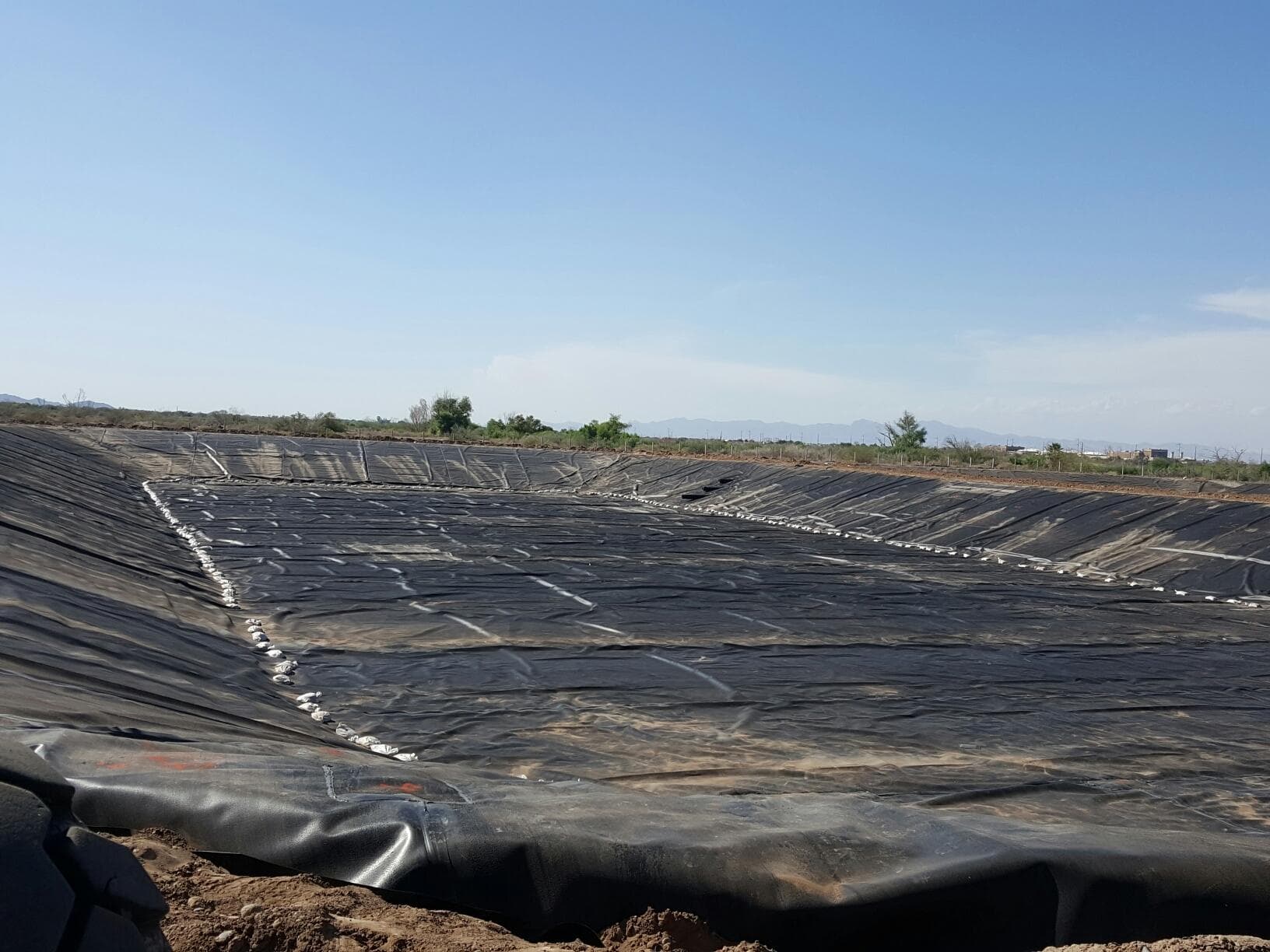
EPS is dissolved by petroleum hydrocarbons, so designs in traffic corridors and at bridge approaches commonly place a geomembrane separation layer over the geofoam where a fuel spill is a credible exposure. EC Applications self-performs that lining alongside the block placement, using the same welding and seaming work our crews do on ponds and landfill cells.
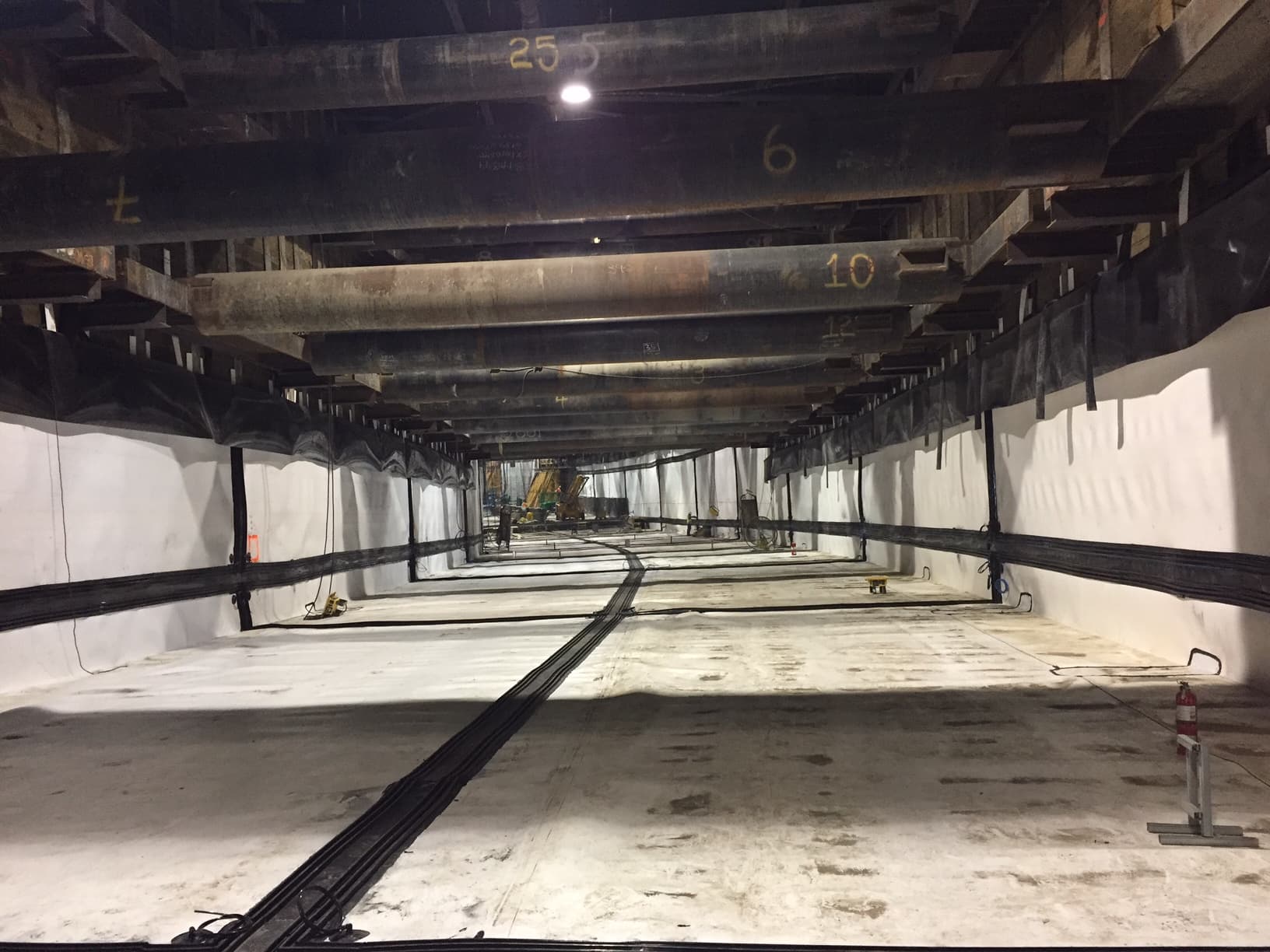
That membrane has one job and it is chemical. It is a barrier over the fill, not an envelope around it. Detailed the wrong way it becomes a basin that holds water against the blocks instead of shedding it. It should drain to the drainage layer, and it should never be the place where water collects.
What this changes on the job
Get the design high water elevation before anyone orders blocks. It sets the required ballast, the ballast sets the thickness of the section above the fill, and that thickness sets finished grade. Finding the flotation requirement after the block layout is drawn means redrawing the layout, and on a widening or a bridge approach with fixed tie-in elevations there is often nowhere for the extra thickness to go.
Geofoam is a well-behaved material with a short list of things that hurt it. Hydrocarbons, long UV exposure, and standing water are most of that list. The first two are handled by covering the blocks. The third is handled with a number, and the number should be on the drawings before the first block is set.