On this page
- What questions actually determine liner material choice?
- How do the major geomembrane materials differ at a glance?
- How do UV, chemical, and temperature exposure narrow the choice?
- Why does the subgrade matter as much as the fluid?
- When does prefabrication drive the material decision?
- Where do specifications and standards come in?
- Who should be involved in material selection, and when?
Choosing a geomembrane comes down to five questions: what the liner must contain, what it will be exposed to, what it will rest on, how it will be installed, and which specification it has to meet. Answer those five honestly and the field of candidate materials usually narrows from a dozen options to two or three. This guide explains how the major geomembrane families differ, which site conditions push the decision one way or the other, and when to bring the installer into the conversation.
What questions actually determine liner material choice?
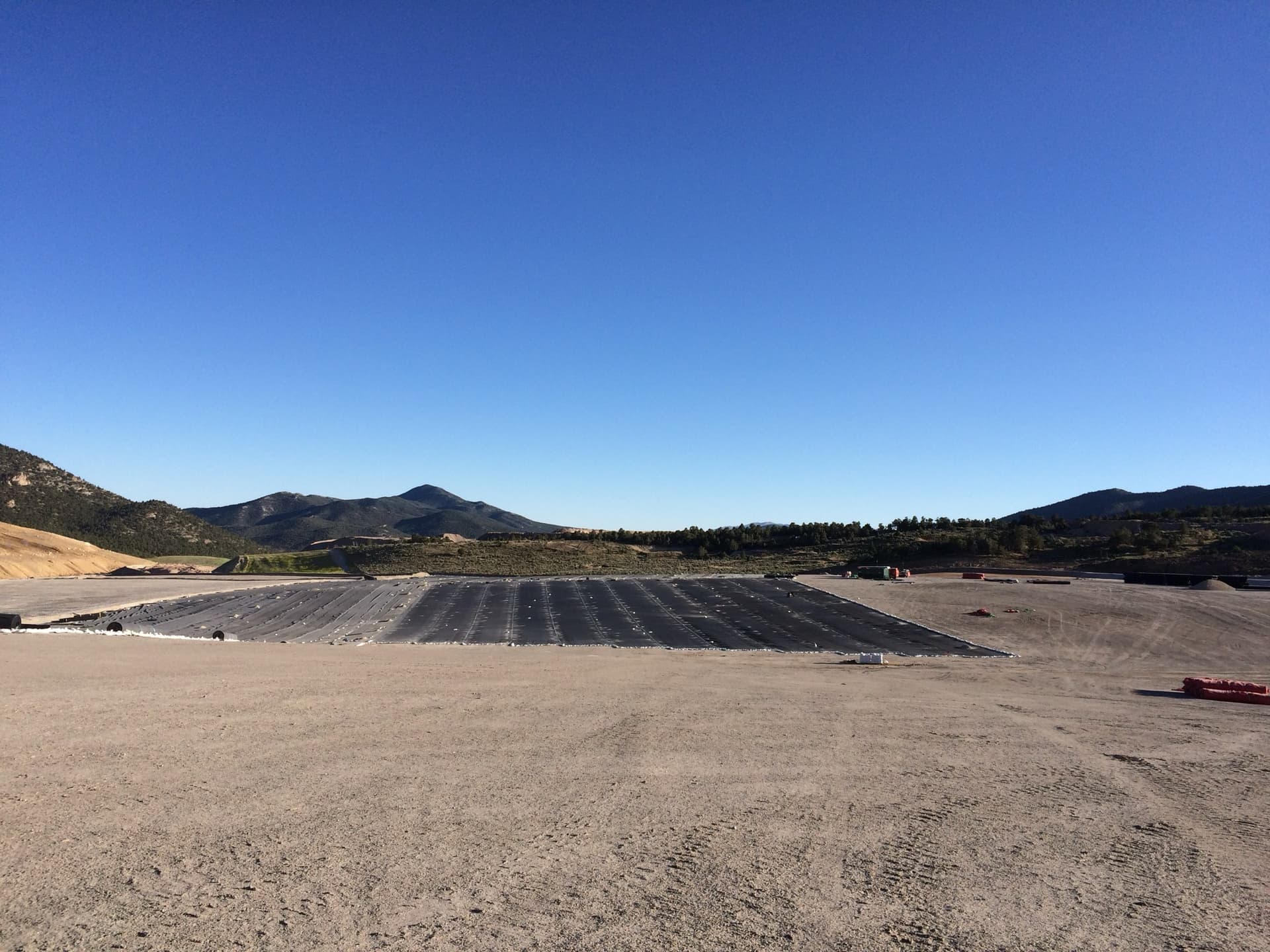
For a wastewater lagoon, landfill cell, mining containment area, or water reservoir, start with the operating conditions. Identify the liquids and gases the membrane will contact, including cleaning chemicals and upset conditions. Map exposed areas, normal and minimum liquid levels, and operating temperatures. Review settlement, slope interfaces, penetrations, and equipment access. These inputs help the engineer specify a product and installation method that can be built and tested at the site.
- Confirm compatibility with the actual contained liquid, concentration, temperature, and duration of contact.
- Evaluate weathering for every area exposed during construction, operation, drawdown, and maintenance.
- Resolve subgrade preparation, expected movement, and protection against puncture before selecting thickness.
- Compare roll and panel layouts against access, lifting limits, wind controls, and field seam locations.
- Identify the project specification, applicable permit conditions, required product approvals, and construction quality assurance plan.
How do the major geomembrane materials differ at a glance?
HDPE (high-density polyethylene) is used in landfill, mining, and water containment. GRI-GM13 covers smooth and textured sheet from 30 to 120 mil. Its manufacturing requirements include tensile, puncture, stress-crack, and durability tests. HDPE's stiffness makes settlement and details around pipes worth reviewing early. The engineer must assess allowable strains for the system; a laboratory tensile elongation value is not an allowable field strain. Roll layout also affects how much seaming must be completed on site.
LLDPE (linear low-density polyethylene) offers greater flexibility for applications such as landfill closures where settlement matters. GRI-GM17 distinguishes smooth and textured sheet, with different tensile and puncture criteria. It also includes UV resistance requirements. LLDPE should therefore be evaluated by formulation and exposure data, rather than excluded from exposed service as a material family. Solmax, for example, publishes exposed-service guidance for its GSE LLX product.
RPP (reinforced flexible polypropylene) combines a polymer membrane with an internal reinforcing scrim. GRI-GM18 covers both nonreinforced and reinforced flexible polypropylene, including reinforced thicknesses of 36, 45, and 60 mil. Prefabricated panels can reduce field seaming for lagoon liners and covers. Panel dimensions still have to suit shipping, lifting, deployment, and the manufacturer's fabrication requirements. Wind exposure requires a deployment and restraint plan for either panels or rolls.
PVC (polyvinyl chloride) geomembranes are flexible and can be fabricated into panels. ASTM D7176 addresses nonreinforced PVC for buried applications. Compliance with that specification alone does not establish suitability for an exposed lagoon edge. For exposed service, obtain weathering data and manufacturer confirmation for the proposed product. A cover also needs defined performance: soil cover, a floating cover, and water above the liner do not provide interchangeable exposure conditions.
Reinforced ethylene interpolymer alloy (EIA) membranes, including XR-5, are another option for industrial wastewater and lagoon containment. Review the selected grade's chemical resistance and mechanical properties against the actual service conditions. GRI-GM34 covers EIA geomembranes; manufacturer data and the project specification remain necessary to establish suitability. A product family's chemical-resistance reputation cannot establish compatibility with every wastewater mixture.
How do UV, chemical, and temperature exposure narrow the choice?
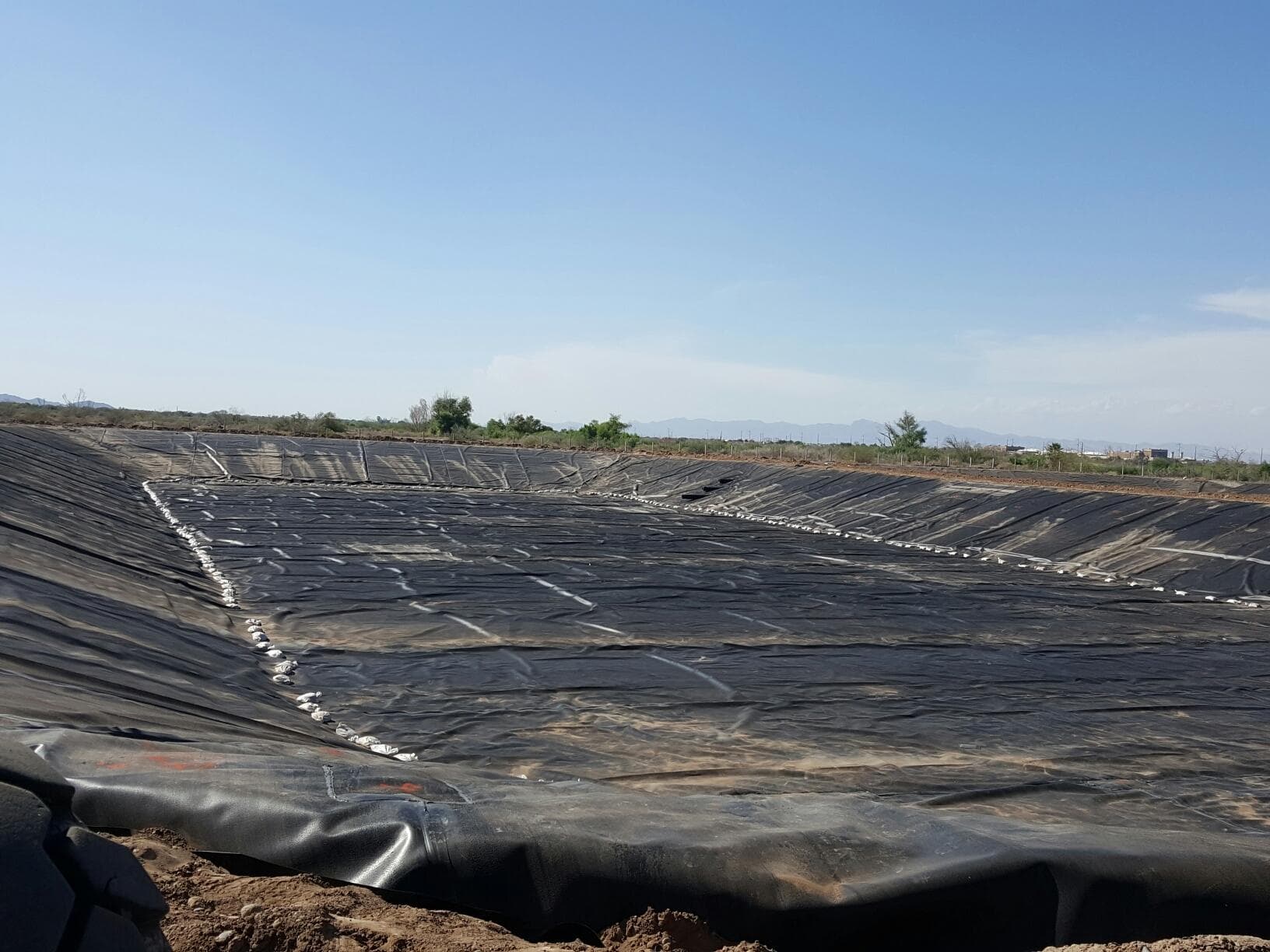
GRI-GM13's laboratory UV criterion calls for at least 50 percent high-pressure oxidative induction time (HP-OIT) retention after 1,600 hours of the specified exposure. GRI-GM17 uses a 35 percent retention criterion. These are manufacturing qualification criteria. Neither provides a direct conversion to years of exposed service. Ask for product-specific weathering evidence suited to the site's climate and temperature. For lagoons, include the exposed freeboard band and drawdown periods; water cover alone does not establish protection from UV throughout the operating cycle.
Chemical resistance charts are a starting point for review. Give the manufacturer the liquid composition, concentrations, temperature range, and contact duration, including cleaning and upset conditions. EPA Method 9090A evaluates changes in liner properties after contact with waste and can support a compatibility assessment where appropriate. It does not replace the engineer's selection decision. Confirm operating-temperature limits and installation conditions for the actual product; a single temperature cutoff cannot represent every formulation.
Why does the subgrade matter as much as the fluid?
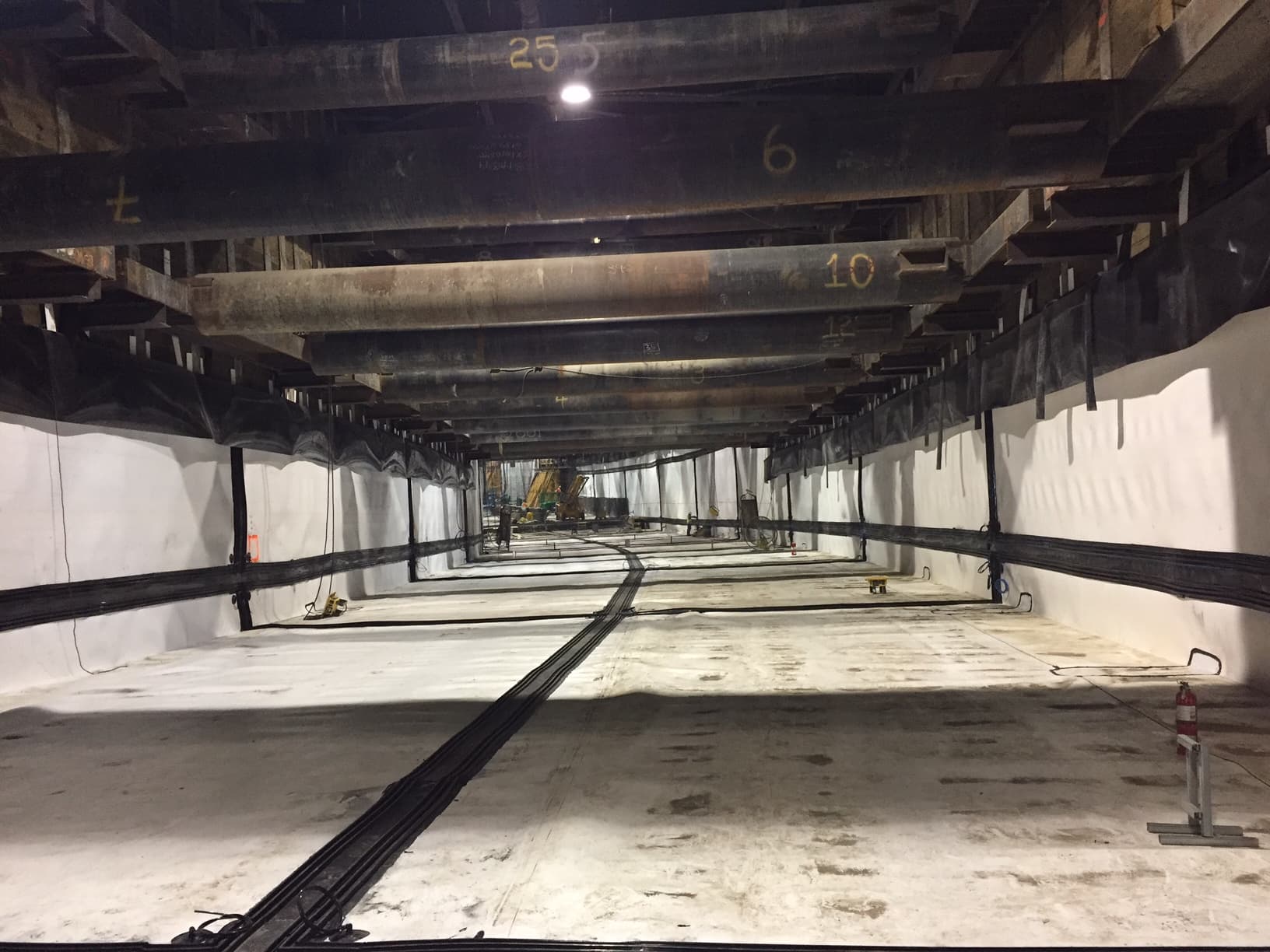
Angular rock, debris, voids, and uneven settlement can damage a liner. Prepare and inspect the subgrade before deployment, and have the engineer select any protection layer for the expected loading and protrusions. Geotextile weight alone is not a puncture-protection design. Where movement is expected, evaluate the membrane, seams, attachments, and interfaces together. Concrete connections and pipe penetrations need details that can be installed and inspected without concentrating strain in the sheet.
When does prefabrication drive the material decision?
Compare proposed panel layouts before choosing the installation method. Factory fabrication can move some seams into controlled conditions, while large roll layouts may suit open cells. Both approaches need inspection and test records. Ask the installer to identify field joints, penetrations, lifting requirements, temporary restraint, and repair access. Seaman's XR-5 sample installation specification provides one product-specific example of factory fabrication and field inspection requirements. A lower field-seam count alone does not demonstrate an acceptable installation.
Where do specifications and standards come in?
Name the applicable standard and revision, then define the project requirements beyond it. GRI material specifications provide manufacturing criteria and may need additional project-specific tests. For potable contact, confirm the approvals required by the authority and specification, including NSF/ANSI/CAN 61 where applicable. Check the exact product listing and use conditions. For seams, ASTM D4437 addresses nondestructive evaluation; ASTM D6392 addresses destructive testing of nonreinforced thermofusion seams. Reinforced membranes require appropriate methods and acceptance criteria. GRI-GM19a and GM19b address different polyolefin seam categories and are not universal sampling schedules.
Who should be involved in material selection, and when?
Bring the engineer, manufacturer, and installer together before the specification is frozen. The engineer establishes the design and acceptance requirements. The manufacturer supplies product and exposure evidence. The installer reviews access, deployment, connections, and the proposed test program. Resolve those details before bids are compared so each bidder prices the same work and identifies any exceptions.